SEO Title: Future Interior Design Trends in Kenya 2026–2030 | InteriorDesigners.co.ke
Meta Description: Discover the future of interior design in Kenya from 2026 to 2030, including biophilic design, smart homes, sustainable materials, African-inspired interiors, wellness, flexible spaces and luxury design.
Suggested URL: /future-interior-design-trends-in-kenya/
Kenya’s interior design industry is moving into a new era. The future is no longer defined simply by expensive furniture, decorative finishes or following international design styles. Instead, future interior design trends in Kenya are increasingly centred on functionality, wellness, sustainability, technology, local identity, flexibility and long-term value.
From luxury homes in Karen and Runda to apartments in Kilimani and Westlands, offices in Upper Hill, hospitality spaces in Mombasa and commercial developments across the country, clients are becoming more deliberate about how their interiors should look, function and perform.
Recent industry discussions from the Interior Design Society of Kenya (IDSK) identify sustainability, biophilic design, technology, cultural identity, flexible spaces and bespoke craftsmanship among the forces shaping the future of Kenyan interiors.
Meanwhile, more recent Kenyan residential-design research points toward wellness, adaptable layouts, smarter use of space, local material knowledge, maintenance and long-term value.
This means the Kenyan interior of the future will not necessarily be the most extravagant one.
It will be the one that is beautiful, intelligent, comfortable, adaptable and distinctly suited to the people and environment it serves.
At InteriorDesigners.co.ke, we translate these emerging trends into practical interior design, renovation, fit-out, styling and custom interior solutions for residential and commercial projects.
Start Your Interior Design Project
What Is the Future of Interior Design in Kenya?
The future of interior design in Kenya will be shaped by several interconnected changes:
- Sustainable and locally appropriate materials
- Biophilic design
- Smart-home technology
- Artificial intelligence and digital visualisation
- Wellness-focused interiors
- Flexible and multifunctional spaces
- Modern African design
- Bespoke furniture
- Warm minimalism
- Better storage
- Energy efficiency
- Indoor-outdoor living
- Personalised interiors
- Experience-led commercial spaces
- More professional project planning
The important change is that these trends are beginning to overlap.
A luxury home, for example, might combine biophilic design, smart lighting, custom furniture, natural materials, wellness planning and African artwork within one project.
That is where the future becomes more interesting.
1. Biophilic Interior Design Will Become Mainstream
One of the strongest future trends in Kenya is biophilic interior design.
Biophilic design creates stronger connections between people and nature through the use of natural light, vegetation, natural materials, organic forms, ventilation and views of outdoor spaces.
Kenya is particularly well positioned for this approach because the country’s natural environment provides an enormous source of design inspiration.
Future interiors are likely to incorporate:
- Indoor plants
- Living walls
- Natural timber
- Stone
- Sisal
- Rattan
- Seagrass
- Natural fabrics
- Large windows
- Courtyards
- Natural ventilation
- Earth-inspired colour palettes
IDSK identifies biophilic design, sustainable materials, natural light and energy-conscious solutions as important elements of the future Kenyan interior.
What This Means for Kenyan Homes
A modern Nairobi apartment may use timber, indoor greenery, natural textures and daylight to create a connection with nature even within a dense urban environment.
A villa in Karen may take the concept further by connecting living areas directly to landscaped outdoor spaces.
A coastal property in Nyali or Diani can use natural materials and indoor-outdoor transitions to respond to its environment.
The future is not simply bringing plants indoors. It is designing the entire space around a healthier relationship with nature.
2. Sustainable Interior Design Will Move From Trend to Standard
Sustainability is becoming less of an optional design feature and more of a long-term consideration.
Future Kenyan interiors will increasingly ask:
Where did this material come from?
How long will it last?
How much maintenance does it require?
Can it be repaired or reused?
Does it make sense for the Kenyan climate?
Potential materials and approaches include:
- Reclaimed timber
- Bamboo
- Sisal
- Rattan
- Recycled materials
- Natural stone
- Locally manufactured furniture
- Durable finishes
- Energy-efficient lighting
- Water-efficient fixtures
The IDSK specifically highlights locally sourced materials including bamboo, sisal, rattan, reclaimed stone and upcycled wood as part of the direction of Kenyan interiors.
Sustainable design should therefore not simply mean buying the most expensive “eco” product.
It should mean making better decisions throughout the project.
3. Local Materials Will Give Kenyan Interiors a Stronger Identity
The future of Kenyan interior design is unlikely to be about copying a showroom in Dubai, London or New York.
Instead, designers will increasingly combine international design principles with Kenyan materials and craftsmanship.
Think:
Modern architecture + Kenyan materials + contemporary furniture + local artwork.
This can include:
- Kenyan timber
- Woven baskets
- Sisal
- Rattan
- Stone
- Handmade ceramics
- Local textiles
- Sculptural artwork
- Metalwork
- Handcrafted furniture
The result is an interior that feels contemporary without losing its sense of place.
4. Modern African Interior Design Will Become More Sophisticated
African-inspired interiors are evolving.
The future is not necessarily about filling a room with traditional patterns.
Instead, African identity can be expressed through subtle, high-quality details.
For example:
Neutral contemporary interior + handcrafted Kenyan furniture + original African artwork + sculptural lighting + natural textures.
This creates an interior that feels modern and culturally connected at the same time.
IDSK describes this movement as a cultural renaissance in which traditional influences are being reinterpreted through contemporary forms, local craftsmanship and African identity.
5. Afrofuturism Could Influence High-End Interiors
An emerging direction is Afrofuturism.
Rather than looking backward, Afrofuturism imagines what African design could look like in the future.
Interior applications can include:
- Geometric patterns
- Sculptural furniture
- Brass and copper details
- Strong contrasts
- Contemporary African artwork
- Technology-integrated spaces
- Bold architectural forms
This could become particularly influential in:
- Luxury residences
- Hotels
- Restaurants
- Creative offices
- Galleries
- Fashion spaces
- Entertainment venues
It offers Kenya an opportunity to contribute its own visual language to global interior design.
6. Smart Homes Will Become More Seamless
Technology will increasingly become part of the interior architecture.
Future smart homes may integrate:
- Automated lighting
- Motorised curtains
- Smart blinds
- Security
- Entertainment systems
- Climate controls
- Smart switches
- Voice control
- Integrated speakers
- Energy monitoring
The important change is that technology will become less visible.
Instead of a home filled with gadgets, the technology should disappear into the design.
IDSK expects smart-home systems, automated window treatments, integrated sound and intelligent lighting to become increasingly important in high-end Kenyan projects.
7. AI and 3D Visualisation Will Change the Design Process
The future of interior design will also be influenced by digital tools.
Clients increasingly expect to see what their space could look like before construction begins.
3D visualisation can help demonstrate:
- Furniture
- Materials
- Colours
- Flooring
- Lighting
- Kitchens
- Wardrobes
- Ceilings
- Feature walls
Emerging technologies such as virtual and augmented reality could eventually make proposed interiors more immersive, allowing clients to explore designs before implementation. IDSK also identifies VR and AR as technologies likely to transform the client-designer relationship.
AI can further support designers with concept exploration, visual references, material research and workflow efficiency.
However, technology should support professional design thinking rather than replace it.
8. Wellness Will Become a Core Design Principle
Future homes will increasingly be designed around how people feel, not just how rooms look.
Wellness-oriented interiors can consider:
- Natural lighting
- Ventilation
- Acoustic comfort
- Comfortable furniture
- Reduced clutter
- Storage
- Indoor plants
- Relaxation areas
- Flexible spaces
- Sleep-friendly bedrooms
Recent Kenyan residential design analysis identifies wellness, adaptable layouts, space efficiency and better long-term living quality as increasingly important client priorities.
The Future Bedroom
A future bedroom may combine:
Soft lighting + natural materials + acoustic comfort + integrated storage + comfortable furniture + reduced visual clutter.
Luxury becomes an experience rather than simply an appearance.
9. Flexible Spaces Will Replace Single-Purpose Rooms
Kenyan homes are becoming more adaptable.
A single room may need to function as:
- Home office
- Guest room
- Study
- Entertainment area
- Exercise space
- Children’s activity area
This creates demand for:
- Sliding partitions
- Modular furniture
- Fold-away desks
- Built-in storage
- Convertible rooms
- Multi-purpose furniture
The future home will therefore be designed around changing routines.
This is particularly relevant to apartments in Nairobi where efficient use of floor area is essential.
10. Warm Minimalism Will Continue Growing
Minimalism is evolving from stark and clinical spaces into warmer environments.
The future version combines:
- Clean lines
- Neutral colours
- Timber
- Natural stone
- Textured fabrics
- Soft lighting
- Earthy colours
- Carefully selected décor
Recent Kenyan home-design coverage identifies warm minimalism as a leading direction for 2026 residential interiors.
The goal is simple:
Less clutter without less comfort.
11. Custom Furniture Will Become More Important
Mass-produced furniture cannot always respond to unusual dimensions or individual lifestyles.
This is why bespoke furniture will continue to grow.
Future custom solutions may include:
- Kitchens
- Walk-in wardrobes
- TV units
- Home offices
- Entertainment walls
- Reception desks
- Storage systems
- Display cabinets
- Bars
- Library walls
Custom furniture can also become an important way to incorporate Kenyan craftsmanship.
Example
A luxury home in Runda could combine:
Custom walnut cabinetry + concealed lighting + integrated storage + locally crafted furniture.
The result is more personal than purchasing an entire room from one catalogue.
12. Hidden Storage Will Become a Major Design Feature
As urban homes become more compact, storage becomes increasingly important.
Future interiors will hide storage within architecture.
Examples include:
- Full-height wardrobes
- Under-stair storage
- Built-in cabinets
- Concealed kitchen storage
- Integrated TV units
- Bedroom cabinetry
- Entryway storage
The principle is:
Store more without making the room look more crowded.
This is especially valuable in Nairobi apartments.
13. Indoor-Outdoor Living Will Expand
Kenya’s climate makes indoor-outdoor living particularly attractive.
Future residential projects can integrate:
- Terraces
- Balconies
- Courtyards
- Outdoor lounges
- Covered patios
- Large glazed openings
- Landscaped views
The boundary between inside and outside becomes less rigid.
Coastal Kenya
In Nyali, Shanzu, Bamburi, Mtwapa and Diani, this approach can be especially effective.
A contemporary coastal villa can use natural materials, large openings, shaded outdoor areas and complementary finishes to create a continuous living experience.
14. Kenyan Coastal Design Will Become More Contemporary
Coastal interior design is also changing.
Instead of relying heavily on obvious nautical decoration, designers can use:
- Sand colours
- Natural timber
- Stone
- Linen
- Rattan
- Soft blue
- Natural textures
- Contemporary furniture
This creates a sophisticated coastal aesthetic suitable for:
- Villas
- Apartments
- Hotels
- Restaurants
- Holiday homes
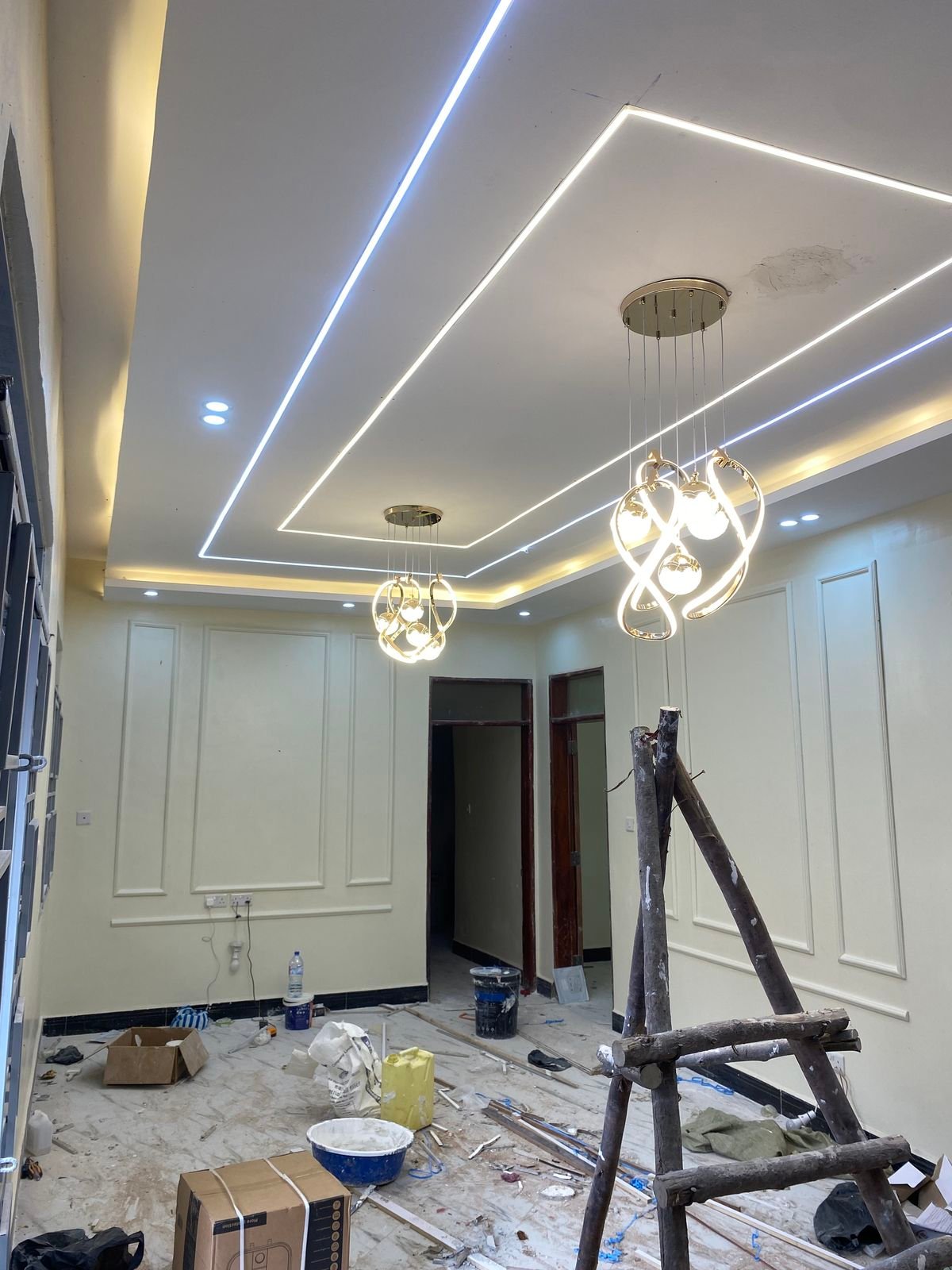
15. Lighting Will Become More Intelligent
Lighting is moving from simple illumination to an integrated design system.
Future interiors will increasingly use:
Ambient Lighting
For overall illumination.
Task Lighting
For working, cooking and reading.
Accent Lighting
For artwork and architectural features.
Decorative Lighting
For visual identity.
Smart Lighting
For automated control and different lighting scenes.
A luxury residence could have different lighting settings for:
Morning → Work → Entertainment → Dinner → Relaxation → Night.
This combines technology with atmosphere.
16. Energy Efficiency Will Influence Interior Design
Interior designers will increasingly consider energy use.
Design decisions may include:
- LED lighting
- Daylight optimisation
- Natural ventilation
- Efficient appliances
- Smart controls
- Solar integration
- Efficient water fixtures
- Appropriate window treatments
This means sustainability and interior design will become increasingly connected.
A beautiful interior that is expensive to operate may not represent the best long-term solution.
17. Multifunctional Kitchens Will Become Social Spaces
The kitchen is evolving beyond food preparation.
Modern kitchens increasingly serve as:
- Cooking spaces
- Dining areas
- Family spaces
- Workspaces
- Entertainment areas
- Storage zones
Future kitchens may incorporate:
- Large islands
- Breakfast counters
- Integrated appliances
- Hidden storage
- Charging points
- Smart lighting
- Custom cabinetry
For luxury homes, the kitchen can become one of the primary social spaces.
18. Bathrooms Will Become Wellness Spaces
The bathroom is also becoming more experiential.
Future bathroom design may incorporate:
- Walk-in showers
- Freestanding baths
- Rain showers
- Custom vanities
- Integrated lighting
- Natural stone
- Timber accents
- Large mirrors
- Better storage
The objective is to create a private environment that feels calm and comfortable.
19. Home Offices Will Become Permanent
The home office is no longer simply a temporary response to remote work.
For many households, it is becoming a permanent part of residential planning.
Future home offices will focus on:
- Ergonomics
- Acoustic comfort
- Storage
- Natural light
- Technology
- Video-call backgrounds
- Integrated power
- Privacy
A well-designed home office can therefore become a dedicated architectural feature rather than a desk placed in a spare corner.
20. Offices Will Become More Human-Centred
Commercial interior design is changing just as rapidly.
Future Kenyan offices will increasingly balance:
Productivity + collaboration + employee wellbeing + brand identity.
Instead of only rows of desks, offices may include:
- Collaboration zones
- Quiet rooms
- Informal meeting spaces
- Breakout areas
- Flexible workstations
- Wellness spaces
- Acoustic solutions
- Technology-enabled meeting rooms
Recent Nairobi design analysis similarly identifies warmer materials, wellness-led planning, flexible work zones and stronger local expression as important developments in both homes and offices.
Explore our office interior design services in Nairobi for commercial applications of these principles.
21. Hospitality Design Will Focus on Experience
Hotels, restaurants and resorts will increasingly use interiors to create memorable experiences.
Future hospitality spaces may combine:
- Local craftsmanship
- Storytelling
- Natural materials
- Technology
- Comfortable seating
- Atmospheric lighting
- Cultural identity
For Kenya’s tourism sector, this creates an opportunity to design spaces that feel distinctly Kenyan rather than generic international hotels.
22. Commercial Interiors Will Become More Brand-Driven
A company’s interior can communicate its identity before a customer speaks to anyone.
Future commercial interiors will therefore integrate:
- Brand colours
- Materials
- Signage
- Lighting
- Furniture
- Customer circulation
- Digital technology
- Architectural details
A law firm, technology company, hotel and fashion brand should not have identical interiors.
The interior should tell the customer who the business is.
23. Quiet Luxury Will Influence High-End Kenyan Interiors
Luxury design is changing.
Instead of using expensive finishes everywhere, high-end interiors are increasingly focused on:
- Craftsmanship
- Proportion
- Material quality
- Comfort
- Bespoke details
- Subtle lighting
- Personal artwork
- Functional design
This is often called quiet luxury.
A high-end home does not need to announce its cost.
The quality should be visible through the details.
24. Personalisation Will Beat Generic Trends
One of the strongest future trends is actually the move away from trends.
Clients increasingly want interiors that reflect:
- Their lifestyle
- Their culture
- Their travels
- Their collections
- Their hobbies
- Their family
- Their work
- Their personality
This means a designer should not simply ask:
“Which style do you like?”
A stronger question is:
“How do you want this space to make your life better?”
That shift from decoration to experience is likely to define the next generation of Kenyan interiors.
25. Designers Will Focus More on Long-Term Value
Future interior design will increasingly consider the lifecycle of the property.
Clients will ask:
- Will the design age well?
- Is the material durable?
- Can it be maintained?
- Can furniture be repaired?
- Will the layout remain useful?
- Does the renovation improve the property’s appeal?
This is particularly important for:
- Property developers
- Landlords
- Airbnb operators
- Hotels
- Commercial landlords
- Homeowners planning to sell
Interior design is therefore becoming an investment decision as well as an aesthetic one.
Recent Kenyan industry commentary notes that professionally planned interiors can influence user experience, market positioning and long-term property value.
26. Design Will Become More Climate-Responsive
Kenya does not have one universal interior-design environment.
A design that works in Nairobi may need modification for Mombasa.
Future designers will increasingly consider:
- Temperature
- Humidity
- Sun exposure
- Ventilation
- Materials
- Maintenance
- Natural light
Nairobi
Focus can include warmth, daylight, insulation, flexible layouts and energy-efficient systems.
Mombasa and Coastal Kenya
Greater attention may be given to ventilation, humidity, durable finishes and indoor-outdoor living.
Rift Valley and Other Regions
Material choices and layouts can respond to local climate and architectural conditions.
The future of Kenyan interior design will therefore be location-aware.
27. The Future Interior Designer Will Be More of a Project Strategist
The role of an interior designer is expanding.
Clients increasingly need help with:
Brief → Space Planning → Design → Visualisation → Materials → Budget → Procurement → Implementation → Styling
This means successful interior design is becoming less about selecting cushions and more about coordinating an entire project.
Professional bodies such as IDSK and IDAK are also emphasising stronger professional standards, recognition, education and structured practice within Kenya’s design sector.
Future Interior Design Trends in Nairobi
Nairobi is likely to remain the country’s largest market for contemporary interior design.
The strongest future opportunities include:
Karen
Luxury homes, natural materials, indoor-outdoor living and bespoke interiors.
Runda
High-end residential design, custom joinery, smart homes and premium finishes.
Muthaiga and Gigiri
Refined residential interiors, hospitality and diplomatic-area properties.
Westlands
Luxury apartments, offices, restaurants and commercial spaces.
Kilimani
Apartment optimisation, multifunctional interiors and contemporary residential design.
Kileleshwa and Lavington
Modern residential interiors, custom furniture and renovation.
Upper Hill
Corporate office design, professional environments and commercial fit-outs.
Future Interior Design Trends in Mombasa
Mombasa and the wider coast have a unique opportunity to develop a recognisable contemporary coastal design language.
Future coastal interiors could combine:
Kenyan craftsmanship + Indian Ocean influence + contemporary architecture + natural materials + climate-responsive design.
Areas including Nyali, Shanzu, Bamburi, Mtwapa, Kizingo and Mombasa Island can benefit from this approach.
Further south, villas and hospitality properties in Diani and Kwale can use indoor-outdoor planning and natural materials to create distinctive coastal environments.
Future Interior Design Trends Across Kenya
The evolution of interior design will not be limited to Nairobi and Mombasa.
Opportunities exist across:
Kiambu, Machakos, Kajiado, Nakuru, Kisumu, Uasin Gishu, Nyeri, Murang’a, Meru, Embu, Kakamega, Kisii, Kilifi, Kwale and other counties.
However, the strongest national design strategy will not be to reproduce the same interior everywhere.
It will be to combine global design knowledge with local context.
That means understanding the property, climate, materials, culture, lifestyle and budget before selecting the design language.
The Future of Luxury Interior Design in Kenya
Luxury interiors are likely to become more intelligent rather than simply more expensive.
Future luxury will increasingly mean:
- Custom furniture
- Smart technology
- Natural materials
- Wellness
- Privacy
- Better acoustics
- Intelligent lighting
- Bespoke details
- High-quality craftsmanship
- Flexible layouts
- Personalisation
The question will shift from:
“How expensive does this room look?”
to:
“How exceptionally does this room work?”
That is a much more sustainable definition of luxury.
What Homeowners Should Do Before Following a New Interior Trend
Before adopting a trend, ask five questions:
1. Does it improve functionality?
If not, it may simply be decoration.
2. Is it suitable for Kenya?
Consider climate, materials, availability and maintenance.
3. Will I still like it later?
Avoid making expensive permanent decisions based solely on short-lived trends.
4. Does it fit my property?
A design should respond to architecture rather than fight it.
5. Does it fit my lifestyle?
The most beautiful design is ineffective if it doesn’t work for the people using it.
Future-Proof Interior Design: The Better Approach
Instead of designing entirely around trends, create a strong foundation.
Keep permanent elements relatively timeless:
- Flooring
- Cabinetry
- Major architectural features
- Built-in furniture
- Quality sanitaryware
Introduce trends through adaptable elements:
- Paint
- Artwork
- Cushions
- Accessories
- Some furniture
- Decorative lighting
This makes future updates easier and more affordable.
How InteriorDesigners.co.ke Can Apply These Future Trends
At InteriorDesigners.co.ke, future-facing design can be translated into practical services including:
- Interior design
- Luxury home interior design
- Office interior design
- Commercial interior design
- Space planning
- 3D visualisation
- Kitchen design
- Bathroom design
- Wardrobe design
- Custom furniture
- Interior renovation
- Fit-out services
- Lighting design
- Interior styling
- Material selection
- Project coordination
The objective is not to force every trend into every project.
Instead, the design should identify which emerging ideas genuinely improve the client’s property.
Frequently Asked Questions About the Future of Interior Design in Kenya
What is the future of interior design in Kenya?
The future is moving toward sustainable materials, biophilic design, smart technology, wellness, flexible spaces, local craftsmanship, personalised interiors and stronger integration between design and property value.
What will Kenyan homes look like in the future?
Future homes are likely to be more flexible, connected, nature-oriented and personalised, with better storage, smart technology, energy-efficient systems and multifunctional spaces.
Will African interior design become more popular?
African-inspired design is already becoming more sophisticated, with designers combining local craftsmanship, artwork and materials with contemporary architecture and furniture.
Will smart homes become common in Kenya?
Smart-home technology is likely to become increasingly integrated into high-end residential and commercial projects, particularly through lighting, security, entertainment and automated controls.
Is sustainable interior design expensive?
Not necessarily. Sustainable design can involve better planning, durable materials, local sourcing, energy efficiency and reducing unnecessary replacement rather than simply purchasing expensive eco-labelled products.
What is the biggest interior design trend in Kenya?
There is no single trend that will define every Kenyan property. The broader movement is toward interiors that combine functionality, comfort, sustainability, identity and technology.
What are the future office design trends in Kenya?
Flexible workspaces, wellness, collaborative areas, acoustic comfort, technology, natural materials, brand identity and adaptable furniture are likely to become increasingly important.
Will minimalism remain popular?
Yes, but it is evolving. Warm minimalism combines clean layouts with natural materials, earthy colours, textures and greater comfort.
The Future of Kenyan Interiors Is Local, Intelligent and Human
The future of interior design in Kenya will not be defined by one colour, furniture style or architectural trend.
It will be defined by a broader shift in how people think about space.
Sustainability will influence materials.
Technology will influence convenience.
Biophilic design will influence wellbeing.
African craftsmanship will influence identity.
Flexible planning will influence functionality.
Smart systems will influence how homes operate.
Personalisation will influence how spaces feel.
And professional design will increasingly bring these elements together into one coherent environment.
Kenya has the opportunity to develop an interior-design identity that is globally contemporary while remaining unmistakably connected to its people, materials, climate and culture.
At InteriorDesigners.co.ke, our approach is to turn these ideas into practical spaces — from luxury homes and apartments to offices, hospitality environments and commercial properties.
Whether you are planning a new home in Runda, an apartment renovation in Kilimani, a luxury villa in Mombasa, an office in Upper Hill or a commercial project elsewhere in Kenya, the future of your interior begins with a design strategy built around how the space needs to work.
Ready to design the future of your space?
Explore Interior Design Services
Explore Office Interior Design in Nairobi