Gypsum board ceilings are the default choice for modern homes, offices, hotels and clinics in Kenya, and for good reason: they give you a smooth, seamless surface, they hide wiring and ducts, and they can be shaped into coves, trays and tiers that no other mainstream ceiling can match.
They are not perfect, though. Like any building material, gypsum board ceilings perform brilliantly in some situations and badly in others, and most of the horror stories (cracks, sagging, stains) come from using the wrong board or cutting corners on the frame. This guide explains how they work, their real advantages and drawbacks, and where they are the best choice.
What is a gypsum board ceiling?
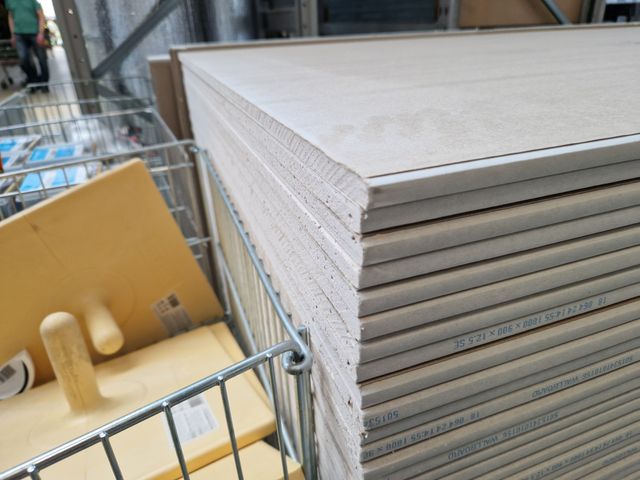
Gypsum board (also called plasterboard or drywall) is a factory-made panel with a core of gypsum between two layers of heavy paper. In a ceiling, the boards are screwed to a suspended steel frame, the joints are taped and filled, the surface is skimmed smooth and then painted.
The result is a continuous, flat or shaped surface with no visible grid. That is the key difference from tile-based suspended ceilings, which we cover in Suspended Ceilings: Cost, Installation Time and Best Use Cases.
How a gypsum ceiling is built
- Set-out. The finished ceiling level is marked around the room.
- Frame. Steel channels are hung from the slab on hangers, spaced at the interval the board manufacturer specifies.
- Services first fix. Electricians and air-conditioning installers run cables and pipes through the void.
- Boarding. Boards are screwed to the frame, with joints staggered.
- Jointing. Tape and jointing compound fill the joints and screw heads.
- Skimming and sanding. The surface is skimmed and sanded smooth.
- Painting. Primer and finish coats are applied.
- Lighting. Downlights, cove strips and other fittings go in.
Types of gypsum board
Not all gypsum board is the same. The right board depends on the room:
| Board type | Best for | Notes |
|---|---|---|
| Standard board | Dry rooms: living rooms, bedrooms, offices | The most common and economical |
| Moisture-resistant board | Kitchens, bathrooms, humid or coastal areas | Treated to resist moisture, but still not waterproof |
| Fire-rated board | Corridors, plant rooms, commercial buildings | Reinforced core to slow the spread of fire |
| Acoustic or perforated board | Meeting rooms, auditoriums, churches, media rooms | Helps absorb sound and reduce echo |
| Impact-resistant board | Schools, high-traffic areas | Tougher face, more resistance to knocks |
Board thickness commonly used for ceilings is around 9 to 12.5 mm.
Pros of gypsum board ceilings
1. A smooth, seamless finish. No grid lines, no panel joints. When properly finished, a gypsum ceiling looks like a single clean surface.
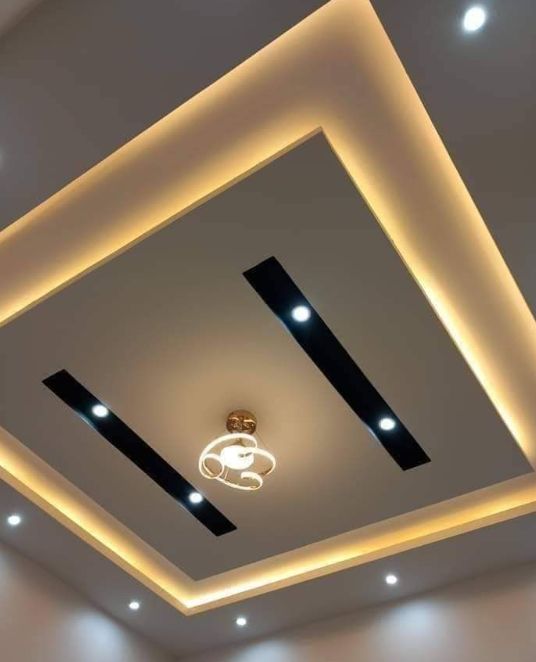
2. Design freedom. Gypsum can be framed into trays, coves, curves, bulkheads and multiple levels. This is the main reason it dominates in homes and hospitality.
3. Integrated lighting. Cove lighting, recessed downlights, linear strips and spotlights can all be built into the ceiling. Our Gypsum Ceilings & Integrated Lighting service plans the ceiling and the lighting as one design.
4. Hides services. Wiring, pipes and air-conditioning ducts disappear into the void.
5. Quick compared with plastering a slab.
6. Paintable in any colour. Any paint scheme, including bold colours, works on a well-prepared gypsum surface.
8. Repairable. Damaged areas can be cut out, patched, re-jointed and repainted.
Cons of gypsum board ceilings
1. Not waterproof. Standard board loses strength when it gets wet. A roof leak or a burst pipe above can stain it, soften it and make it sag.
2. Can crack at joints. Poor jointing, thin tape, building movement or unsupported long spans can cause cracks. Large ceilings usually need control joints so movement is absorbed in a planned line rather than a random crack.
3. Sagging if under-framed. Wide frame spacing, thin board or heavy fittings without extra support lead to waves over time.
4. Reduces ceiling height. The void, frame and board take up some height. In rooms that are already low, plan the drop carefully.
5. Not ideal in constantly wet areas. Direct steam or splashing is hard on gypsum, even moisture-resistant board.
Best applications
Living rooms and bedrooms. The classic use. Smooth ceilings with cove lighting and recessed downlights, planned as part of the room’s whole lighting scheme. See Living Room Interior Design and Bedroom Interior Design.
Offices, boardrooms and reception areas. Where a seamless, premium finish and integrated lighting matter. Combine with acoustic board in meeting rooms.
Hotels, restaurants and lounges. Gypsum allows the curves, tiers and mood lighting that hospitality design relies on.
Clinics and hospitals. Moisture-resistant and fire-rated boards, with sealed finishes and access panels for services. See Hospital & Clinic Interior Design.
Kitchens and bathrooms. Possible with moisture-resistant board, good ventilation and mould-resistant paint. In bathrooms with heavy steam and poor ventilation, consider PVC or cement-board alternatives. See Bathroom Interior Designs for how we handle wet rooms.
Renovations. Gypsum can cover a stained, uneven slab and give a tired room a completely new look.
Why gypsum ceilings fail, and how to prevent it
| Problem | Usual cause | Prevention |
|---|---|---|
| Cracks along joints | Poor tape or compound, no control joints, building movement | Proper jointing, quality tape, control joints on long runs |
| Sagging or waves | Wide frame spacing, thin board, heavy fittings | Correct framing spacing, extra support for fittings |
| Stains and bubbling | Roof or pipe leaks, condensation | Fix the source first, use moisture-resistant board where suitable |
| Visible screw heads | Poor finishing, screws not countersunk | Proper screw depth and skimming |
| Mould in corners | Poor ventilation, damp | Ventilation, mould-resistant paint |
Gypsum compared with the alternatives
- Gypsum vs suspended grid and tile: gypsum is seamless and shapeable; grid is faster and gives easy access. See Suspended Ceilings: Cost, Installation Time and Best Use Cases.
- Gypsum vs PVC: PVC is waterproof and cheaper, gypsum has far more design flexibility.
- Gypsum vs timber: timber is warm and natural but needs more care. Gypsum is easier to maintain.
- All the main types side by side: see Main Types of Ceilings Compared.
Maintenance and lifespan
A well-built gypsum ceiling needs very little: occasional dusting and repainting every few years. Treat stains seriously, since they almost always signal a leak, and fix the leak before patching. With quality materials and proper installation, gypsum ceilings last for many years.
For a breakdown of pricing, see Gypsum Ceiling Cost in Nairobi, and for design pitfalls see gypsum ceiling lighting mistakes. You can also browse real examples in our Gypsum Ceiling Designs Portfolio, and read about the installation process in Gypsum Ceilings Installation Kenya.
Contact Suimas Interiors for a site Assessment
Call or WhatsApp: 0717 044 443 | 0739 255 050 | 0725 021 709
Email: info@suimas.co.ke
Website: interiordesigners.co.ke
Location: Solar House, Fourth Floor, Nairobi CBD
Related Post Resources
- Living Room Interior Design
- Bedroom Interior Design
- Office Interior Design & Fit-Outs
- Clinics & Dispensary Interior Design
- Renovation Services
- Kitchen Renovation Ideas for Modern Kenyan Homes
- How Much Does House Renovation Cost in Kenya
- Ceiling Types for Living Rooms Compared
- Best Ceiling Types for Living Areas
- Modern Apartment Interior Designers in Kenya
- Gypsum Designs Portfolio
- Hospital Interior Design Contractors in Kenya
- Medical Clinic Interior Design – Suimas
- Apartment Contractors in Kenya – Suimas
- Suimas Interior Design Services
- Ceiling Types for Living Rooms
- Suspended Ceilings Installation
