Your ceiling height, home type, budget, climate and the way your household actually lives are what decide the best ceiling types for living areas, and the right answer for a Nairobi apartment is not the right answer for a Mombasa villa. If you want a side-by-side comparison of every option, read our companion guide, Ceiling Types for Living Rooms Compared.
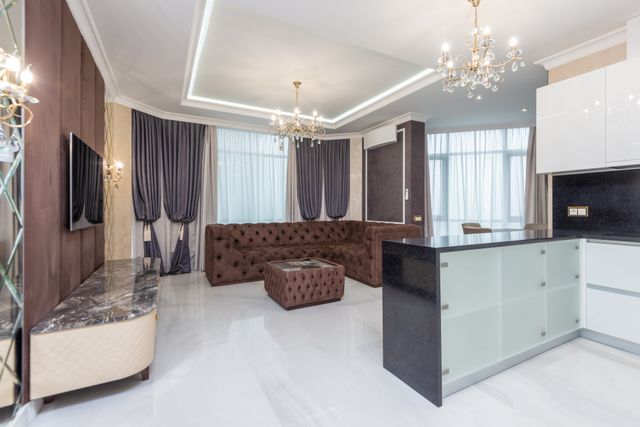
Work through the four steps below and you will end up with a clear shortlist.
Step 1: Start with your ceiling height
Height is the first filter, because it limits what you can do without making the room feel cramped.
Low ceilings (roughly 2.4 m to 2.6 m clear). Keep everything shallow. A plain flat gypsum ceiling with a thin perimeter cove is the safest choice. Avoid deep tiers, heavy bulkheads and anything that drops far below the slab. In some very low rooms, a painted slab with neat surface lighting preserves the most volume.
Standard ceilings (roughly 2.7 m to 3 m). You have room for a shallow tray ceiling or a flat gypsum ceiling with cove lighting. This is the sweet spot for most designs.
High or double-height ceilings (above 3 m). You can handle multi-level ceilings, timber accents, pendants and coffered designs. In very tall rooms the risk is the opposite: a ceiling that feels too distant and cold. Timber beams or a lowered feature section over the seating area bring it back to human scale.
As a rule of thumb, many designers try to keep a comfortable clear height after the drop. If you are unsure how much you can lose, we will measure and advise.
Step 2: Think about your home type
Apartments. Rooms are often compact and heights modest. Simple, light ceilings with cove lighting create the most impact per shilling. See our guide to Modern Apartment Interior Designers in Kenya.
Bungalows and maisonettes. More space, often open-plan living and dining. A tray or multi-level ceiling can define the zones, with a simpler ceiling in the circulation areas.
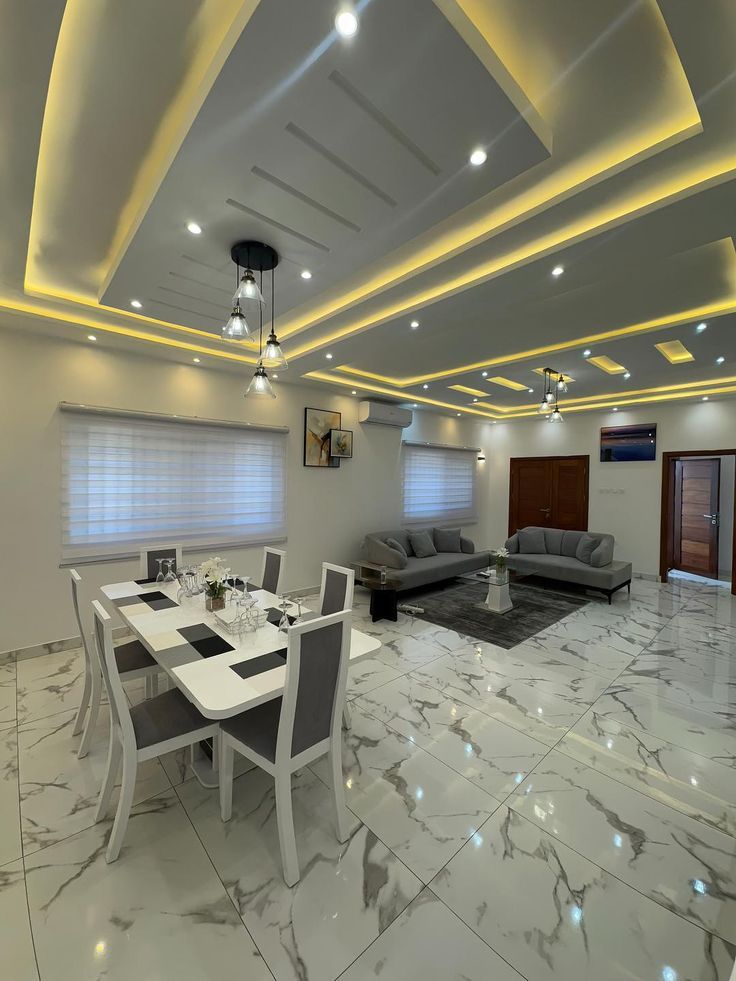
Villas and large family homes. Room for statement ceilings, feature lighting and timber details. Still, restraint reads as expensive: pick one hero element rather than several.
New builds with bare slab. You are working from scratch, so plan the ceiling and the lighting together before the electricians first-fix. Our Full House Interior Design service coordinates this across every room.
Step 3: Match the ceiling to your budget
| Budget level | Best ceiling choice | Why |
|---|---|---|
| Tight | Painted slab, or PVC ceiling | Lowest cost, quick, practical |
| Moderate | Plain flat gypsum with recessed downlights | Clean, modern, the best value for money |
| Comfortable | Gypsum with perimeter cove lighting | The best all-round upgrade |
| Generous | Tray or multi-level gypsum with layered lighting, timber accent | Designed, statement result |
Spend where the ceiling is seen most. The living room ceiling deserves more of the budget than the store room. For how pricing is built up, see Gypsum Ceiling Cost in Nairobi.
Step 4: Consider your climate and location
Nairobi and the highlands. Mild, moderate humidity. Standard gypsum board performs well in dry living areas, and timber is manageable with proper sealing.
Coastal homes (Mombasa, Kilifi, Malindi). High humidity and salt air. Use moisture-resistant board, make sure the room is ventilated, use mould-resistant paint, and avoid untreated timber and standard mineral tiles. PVC and metal handle the coast well in covered outdoor areas.
Lakeside and warm humid regions (such as Kisumu). Similar logic: moisture-resistant boards, good air movement and quality paint systems.
Homes with air conditioning. Plan the diffuser and return positions before the ceiling is drawn, so the lighting layout and the air flow do not clash.
Our top picks for living areas
1. Plain gypsum ceiling with perimeter cove lighting: the best all-rounder. Works at almost every height, suits most styles, and gives the biggest improvement for the price. If you only remember one recommendation from this article, this is it.
2. Shallow tray ceiling: the best for standard-height rooms that need depth. Adds architecture without losing much headroom at the edges, and gives cove lighting a natural home.
3. Multi-level feature ceiling: the best for large open-plan rooms. Defines separate zones for sitting, dining and circulation. Needs enough height and careful design to avoid heaviness.
4. Gypsum with a timber accent: the best for warmth. A timber or timber-look section above the dining table or seating area adds character without covering the whole ceiling.
5. PVC ceiling: the best for tight budgets and humid conditions. Practical, wipeable and quick, and a sensible choice where moisture is a concern.
6. Painted or exposed slab: the best for low rooms and industrial styles. Preserves every centimetre of height, and works when the concrete and services are well finished.
Open-plan living, dining and kitchen
Open-plan rooms are where ceilings earn their keep, because they can mark out zones without walls. A common approach is a lowered tray or bulkhead over the dining table, a simple flat ceiling over the main living space, and a practical, moisture-tolerant ceiling over the kitchen section. Using subtle changes of level or lighting rather than three different materials keeps the space coherent.
Plan the lighting with the ceiling
A great ceiling with poor lighting still looks flat. The usual living area scheme layers three things:
- Ambient: cove strips or evenly spaced downlights.
- Task: lamps, reading lights, kitchen worktop lighting.
- Accent: wall washers, picture lights, a feature pendant.
Warm white (2700K to 3000K) is the usual choice in living spaces, and dimmable drivers are worth specifying from the start, because they cannot be added later without replacing the drivers. For more on the common errors, see Six Gypsum Ceiling Lighting Mistakes.
Mistakes to avoid
- Choosing a ceiling from a photo without checking your own height.
- Building a heavy multi-tier ceiling in a standard-height room.
- Deciding on lighting after the ceiling is built.
- Using standard board or untreated timber in humid regions.
- Hiding drivers or valves above the ceiling with no access panel.
- Treating the ceiling and the feature wall as unrelated decisions.
Visualise it before building
A 3D render lets you see the ceiling, the lighting and the feature wall in your actual room before a single board goes up. See 3D Interior Design Renders.
For a deeper look at materials, see Main Types of Ceilings Compared, and for gypsum specifically, Gypsum Board Ceilings: Pros, Cons and Best Applications.
Get a ceiling recommendation for your home
Send us your ceiling height, a few photos and your budget, and we will recommend the ceiling that suits your living area. Explore our Living Room Interior Design and Gypsum Ceilings & Integrated Lighting services.
Call or WhatsApp: 0717 044 443 | 0739 255 050 | 0725 021 709
Email: info@suimas.co.ke
Location: Solar House, Fourth Floor, Nairobi CBD
Related Post Resources
- Residential Interior Design
- Bedroom Interior Design
- Kitchen Cabinets, Wardrobes & Joinery
- Floor Installation Services
- Painting & Special Effect Finishes
- Fluted Panels & Wainscoting
- Renovation Services
- Suspended Ceilings: Cost, Installation Time and Best Use Cases
- Fluted Panels vs Marble Sheets: Which Is Better for Your TV Wall?
- Best Flooring for Kenyan Homes
- House Renovation Cost in Runda
- Complete Interior Finishes Package for a New House in Ruiru
- Gypsum Ceilings Installation Kenya
- Gypsum Ceiling Designs Portfolio
- Residential House Construction Services – Suimas
