How to Choose the Right Interior Doors for Your Home
Choosing the right interior doors for your home involves more than selecting an attractive design. Interior doors influence privacy, comfort, sound control, movement between rooms and the overall appearance of your house. The right doors can complement your flooring, wall finishes, wardrobes and furniture while making everyday living more convenient.
Whether you are completing a newly built house, renovating an existing property or upgrading individual rooms, it is important to consider the purpose of each door before making a purchase. A bedroom door may need better sound insulation, while a bathroom door should withstand moisture. Similarly, a sliding door can save space in a compact apartment, whereas a decorative panel door may complement a traditional living room.
In Kenya, homeowners can choose from flush doors, moulded doors, solid-core doors, hardwood doors, engineered timber doors, glass-panel doors and modern sliding designs. Each option has different characteristics, appearance, maintenance requirements and costs.
This guide explains how to choose the right interior doors for your home in Kenya, including door types, materials, finishes, sizes, room requirements, hardware, installation and budgeting considerations.
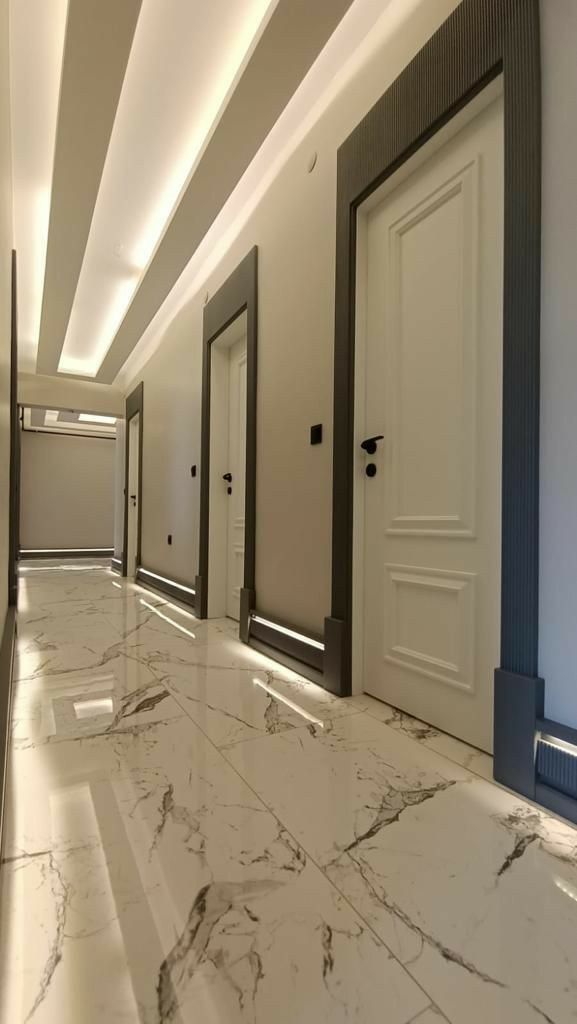
1. Understand the Different Types of Interior Doors
Before choosing an interior door, understand the main construction and design options available. Some doors are classified by their internal construction, while others are categorised by their appearance or opening mechanism.
This distinction matters because two doors may look similar but have different levels of durability, sound insulation and performance.
Flush Doors
Flush doors have smooth, flat surfaces with little or no decorative panel detailing. They are popular in modern homes because their simple appearance works well with minimalist interiors.
They can feature painted, laminated or wood-grain finishes, depending on the product specification.
Best suited for:
- Modern bedrooms.
- Home offices.
- Utility rooms.
- Contemporary apartments.
- Homes with simple, coordinated finishes.
Flush doors are also useful when you want several doors throughout the house to have a consistent appearance.
Panel Doors
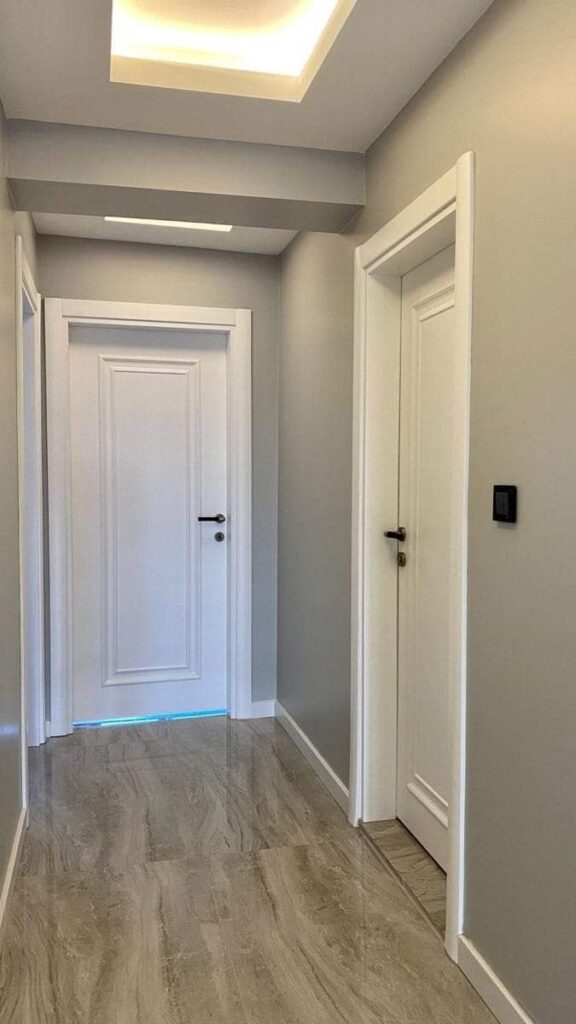
Panel doors feature decorative sections created by dividing the door surface into rectangular, square or other shapes. They can create a classic appearance while adding depth to the interior.
Popular designs include two-panel, four-panel and six-panel doors.
Best suited for:
- Traditional homes.
- Classic bedroom interiors.
- Formal dining areas.
- Homes with decorative wall mouldings.
- Transitional interior design styles.
You can select simple recessed panels for a contemporary appearance or more detailed raised panels for a traditional home.
Moulded Doors
Moulded doors use shaped surface patterns to create decorative designs. They are available in different styles and can provide an affordable way to introduce panel detailing into a home.
Their performance depends on the core construction, surface material and quality of the finish.
Best suited for:
- Guest bedrooms.
- Secondary rooms.
- Interior spaces with moderate usage.
- Homeowners looking for decorative designs within a controlled budget.
Solid-Core Doors
Solid-core doors have a denser internal construction than hollow-core alternatives. Depending on their specification, they can provide a more substantial feel and better sound reduction.
They are particularly useful in rooms where privacy and quiet matter.
Best suited for:
- Main bedrooms.
- Children’s bedrooms.
- Home offices.
- Study rooms.
- Rooms adjoining busy living areas.
A solid-core door can be a worthwhile investment in areas where occupants need greater separation from household noise.
Solid Wood and Hardwood Doors
Solid wood doors offer natural grain patterns, warmth and a premium appearance. Depending on the timber species and construction, they can provide a durable option for residential interiors.
Different timber species have different colours, grain patterns and characteristics. Natural timber can also be stained, sealed or painted to match the house.
Best suited for:
- Premium bedrooms.
- Large residential properties.
- Traditional interiors.
- Homeowners who prefer natural timber finishes.
- Statement interior openings.
Before choosing solid timber, consider the quality of the timber, moisture conditions, finishing and maintenance requirements.
Engineered Wood and MDF Doors
Engineered wood doors use manufactured wood products to achieve consistent dimensions and finishes. MDF is one material used in some interior door constructions.
These doors can offer smooth surfaces suitable for painting, laminating and decorative detailing.
Best suited for:
- Modern residential interiors.
- Painted door designs.
- Custom decorative finishes.
- Homes requiring coordinated door colours.
However, not every MDF door has the same moisture resistance or strength. Check the manufacturer’s specifications rather than assuming all engineered doors perform identically.
2. Choose the Right Interior Door Material
The material influences how a door looks, feels and performs over time. It also affects its weight, cost, finishing requirements and maintenance.
Consider these common options when choosing interior doors in Kenya.
| Door material | Main characteristics | Suitable applications |
|---|---|---|
| Natural hardwood | Natural grain, substantial feel and premium appearance | Bedrooms and selected statement interiors |
| MDF | Smooth surface and flexible decorative finishes | Painted and modern interior doors |
| Engineered timber | Consistent construction and different finish options | Bedrooms and general interior spaces |
| Hollow-core construction | Lightweight and economical | Low-demand utility areas and selected closets |
| Solid-core construction | Denser construction and better potential sound reduction | Bedrooms, studies and private rooms |
| Moisture-resistant engineered doors | Designed for selected humid environments, subject to specification | Suitable bathroom and utility applications |
Remember that the door’s core and its outer finish are different things. For example, an engineered wood door can have a solid or lighter core and a laminate, veneer or painted surface.
Always confirm the complete product specification before purchasing.
3. Select Interior Doors According to Each Room
Different rooms have different requirements. Instead of buying identical doors for every opening, consider how each room is used.
Bedroom Doors
Bedrooms require privacy and a comfortable environment. A door with suitable density and good frame sealing can help reduce household noise.
Consider solid-core doors, quality engineered timber doors or well-made panel doors.
Popular bedroom door designs include:
- Smooth flush doors.
- Modern Shaker-style doors.
- Natural wood-grain doors.
- Recessed panel doors.
- Neutral painted doors.
- Selected decorative laminate designs.
For master bedrooms, you can choose a more detailed finish that complements the bed, wardrobe and wall design.
Bathroom Doors
Bathroom doors require particular attention because they are regularly exposed to moisture and humidity.
Choose a suitable moisture-resistant door system with properly sealed edges and an appropriate surface finish. The door frame and surrounding finishes should also suit the bathroom environment.
Options may include:
- Suitable moisture-resistant engineered doors.
- Properly finished PVC-faced doors.
- Approved sealed timber doors for suitable conditions.
- Suitable sliding doors where privacy and installation conditions permit.
Avoid installing an ordinary untreated timber or engineered wood door in a location where regular moisture exposure may damage it.
Also consider ventilation, privacy and the bathroom door’s clearance from the floor.
Kitchen and Pantry Doors
Kitchen doors should complement the cabinetry, flooring and overall interior design. They should also be practical for a room that experiences frequent activity, cooking and occasional moisture.
Consider smooth laminate doors, painted engineered doors or simple panel designs.
For pantries and storage rooms, bifold or sliding doors can be useful where a traditional swing door would interfere with kitchen movement.
If the kitchen is open-plan, a door with selected glass panels can provide separation while maintaining some visual connection between spaces.
Living and Dining Room Doors
Living and dining areas offer more flexibility for decorative door designs.
You can use:
- Double panel doors.
- French-style glass doors.
- Contemporary flush doors.
- Decorative timber doors.
- Wide sliding doors.
- Double-leaf interior doors.
Glass-panel doors can introduce daylight into darker corridors or create a visual connection between adjoining spaces.
However, choose an appropriate glass type and consider privacy, especially where the living room connects directly to bedrooms or private areas.
Home Office Doors
A home office benefits from a door that provides privacy and helps limit household noise.
Solid-core construction is worth considering, particularly when the office is close to the living room or a busy corridor.
Also pay attention to frame fitting, perimeter gaps and hardware. Even a heavy door may provide limited sound reduction if it has poorly sealed gaps.
Wardrobe and Storage Doors
Wardrobe openings, linen cupboards and utility storage areas often have different space requirements from bedrooms.
Depending on the opening dimensions, consider bifold, sliding or conventional hinged doors.
Choose an arrangement that provides convenient access to the stored items without unnecessarily occupying floor space.
4. Consider Sliding, Hinged, Pocket and Bifold Door Designs
A door’s opening mechanism affects how people move around the house and how much floor or wall space remains available.
Hinged Doors
Hinged doors are the most common interior door arrangement. They swing open using hinges attached to the door frame.
They work well in bedrooms, bathrooms, kitchens and most standard interior openings.
Advantages include:
- Familiar operation.
- Wide range of designs.
- Straightforward hardware options.
- Suitable for many conventional door openings.
- Easier integration with traditional door frames.
However, the door needs enough clearance to open fully without hitting furniture or blocking a walkway.
Sliding Doors
Sliding doors move along a track instead of swinging into the room.
They are useful in apartments, compact bedrooms and selected living spaces where conventional door swings would interfere with furniture.
Popular applications include:
- Wardrobe openings.
- Ensuite entrances.
- Pantry doors.
- Room dividers.
- Selected living and dining areas.
Sliding doors can use timber-effect panels, laminate surfaces or suitable glass designs.
Check the track system, wall clearance and installation requirements before selecting this option.
Pocket Doors
Pocket doors slide into a cavity inside the wall when opened. This arrangement allows the doorway to remain relatively unobstructed.
They can work well in compact homes where saving floor space is important.
However, installing a pocket door requires careful wall planning. Electrical wiring, plumbing and structural elements may affect whether the wall can accommodate the required cavity.
Plan the installation before construction or major renovation works begin.
Barn-Style Sliding Doors
Barn-style doors slide along a visible track mounted above the opening.
They can become a decorative feature in modern, rustic or industrial interiors.
They are suitable for selected home office openings, pantries and spaces where the door can slide across an uninterrupted wall.
However, barn-style doors normally leave gaps around the edges. They may therefore provide less privacy and sound control than a well-fitted hinged door.
Bifold Doors
Bifold doors fold into sections when opened. They are useful for wardrobes, cupboards, pantries and selected utility openings.
Their main advantage is that they do not require the same full swing clearance as a conventional hinged door.
Choose a good-quality track and folding hardware to support smooth operation.
5. Match Door Designs to Your Home’s Interior Style
Interior doors should complement the architectural design and decorative finishes throughout the house.
You do not necessarily need every door to have exactly the same design. However, maintaining a consistent visual direction helps create a coordinated interior.
Modern Minimalist Interior Doors
Modern minimalist homes work well with simple flush doors, straight lines and understated hardware.
Popular finishes include:
- Matte white.
- Light grey.
- Natural oak-effect.
- Warm wood laminate.
- Soft beige.
- Dark charcoal.
A flat door with concealed or minimal detailing can blend neatly with contemporary wall finishes.
Contemporary Interior Door Designs
Contemporary interiors combine clean lines with selected decorative details.
Consider flat-panel doors, subtle grooves, wood-grain finishes, glass inserts and coordinated metal hardware.
You can use a slightly more decorative bedroom or dining-room door while maintaining simpler designs in secondary areas.
Traditional Interior Door Designs
Traditional homes often benefit from panel doors, natural timber finishes and decorative mouldings.
Raised panels, warm wood tones and classic handles can complement traditional furniture and architectural details.
Luxury Interior Door Designs
Luxury interiors can feature taller doors, premium veneers, detailed panels, concealed hinges or selected glass inserts.
The quality of installation matters as much as the door itself. Poor alignment, uneven gaps and inconsistent hardware can reduce the appearance of an otherwise premium door.
6. Choose the Right Door Colour and Finish
Door colours influence how rooms connect visually. A well-selected finish can complement the walls, flooring, skirting and furniture.
Popular interior door finishes include:
White: Creates a clean, bright appearance and works with many interior styles.
Natural wood grain: Adds warmth and texture while complementing timber furniture and flooring.
Light oak: Works well in contemporary homes with neutral colour schemes.
Dark walnut: Creates a richer appearance and suits selected premium interiors.
Grey: Provides a modern finish that can complement neutral walls and flooring.
Matte black: Creates contrast and can work well in selected modern or industrial interiors.
Painted colours: Allow the doors to coordinate with specific room themes or decorative features.
You can use the same door colour throughout the house for consistency. Alternatively, introduce a different finish for selected statement doors while maintaining a coordinated palette.
Consider the wall colour, floor tone, skirting and surrounding furniture before choosing the final door finish.
7. Select the Right Door Hardware
Door hardware affects both appearance and everyday performance. A good door should open, close and latch smoothly without unnecessary noise or resistance.
Important hardware components include:
Door Handles
Choose handles that feel comfortable and complement the door design.
Options include lever handles, pull handles and selected modern minimalist designs.
Hinges
Hinges carry the door’s weight and allow smooth movement. Heavier doors generally require suitable hinges and proper fixing.
Consider the hinge material, finish, size and load suitability.
Locks and Privacy Latches
Bedroom and bathroom doors may require suitable privacy hardware.
Select hardware according to the room’s purpose and the level of access control required.
Door Stops
Door stops help prevent handles and door edges from damaging nearby walls or furniture.
Sliding Door Tracks
Sliding doors need suitable rollers, tracks and stopping mechanisms. Good-quality hardware supports smoother operation and more reliable everyday use.
Door Closers
Some selected installations may require door closers. Check the intended use and suitability before specifying them.
For a coordinated appearance, use compatible metal finishes throughout the home. Popular options include matte black, brushed nickel, chrome and selected brass finishes.
8. Choose the Right Door Frame and Installation Details
A door does not operate independently of its frame. The frame, hinges, latch, fixing and installation quality all influence how well the complete unit performs.
Before ordering a door, check the following:
- Wall thickness.
- Door opening width and height.
- Frame condition.
- Door leaf thickness.
- Hinge positions.
- Lock and handle requirements.
- Floor finish and clearance.
- Swing direction.
- Alignment and fixing requirements.
If you are replacing an existing door, assess whether the old frame is still suitable. A damaged, loose or poorly aligned frame may require replacement rather than simply installing a new door leaf.
New houses should have door frames coordinated with floor screeding, tiling, wall plastering and other finishing work.
Correct measurements reduce the risk of ordering a door that does not fit the opening.
9. Understand Standard Interior Door Sizes in Kenya
Door size is an important consideration when building or renovating a home.
Commonly stocked interior door leaf dimensions in Kenya include approximately 762 × 2032 mm and 838 × 2032 mm. These are common product sizes, not a guarantee that every opening in your house will match them.
The actual opening should always be measured before ordering.
When measuring:
- Measure the opening width at the top, middle and bottom.
- Measure the height on both sides.
- Check the depth of the existing frame.
- Account for the finished floor level.
- Confirm the required hinge side and swing direction.
- Check whether a new frame is required.
Use the smallest relevant measurements when assessing an existing opening, and have the supplier or installer confirm the required door and frame dimensions.
For wider openings, consider double-leaf or custom-sized doors, subject to the available space and building requirements.
Where accessibility is important, ensure that the clear opening and door arrangement meet the applicable building requirements.
10. Think About Sound Insulation and Privacy
Door construction and installation influence how much sound travels between rooms.
This is particularly important in homes where bedrooms, studies and living areas are close together.
Solid-core doors generally provide better sound-reduction potential than lightweight hollow-core alternatives. However, the door frame, perimeter gaps and installation quality also matter.
Consider better sound control for:
- Master bedrooms.
- Children’s bedrooms.
- Home offices.
- Study rooms.
- Rooms adjoining television or entertainment areas.
A properly fitted door with suitable seals can improve privacy and reduce unwanted household noise.
If acoustic performance is a priority, ask the supplier about the complete door system rather than relying on the door’s appearance or weight alone.
11. Consider Moisture Resistance and Long-Term Durability
Interior doors experience different environmental conditions depending on their location.
Bathrooms and utility areas may experience more moisture than bedrooms and living rooms. Meanwhile, frequently used doors in busy homes may experience more knocks, scratches and general wear.
Before choosing a door, consider:
- Whether the room experiences humidity.
- How frequently the door will be used.
- Whether the surface can withstand regular cleaning.
- The quality of the edge sealing.
- The suitability of the frame material.
- The expected maintenance requirements.
For bathroom doors, choose a product specifically suitable for the intended moisture exposure. Make sure the finish and exposed edges receive appropriate protection.
For busy family homes, choose durable surfaces and hardware that can withstand repeated opening and closing.
12. Interior Door Ideas for Small Houses and Apartments
Small homes require careful door selection because conventional door swings can interfere with furniture and movement.
Useful space-saving options include:
Sliding doors: Suitable for selected bedrooms, pantries and room divisions where there is sufficient wall space.
Bifold doors: Useful for wardrobes and storage areas.
Flush doors: Their simple appearance can help compact interiors look less busy.
Pocket doors: Can save floor space where the wall construction permits installation.
Glass-panel doors: Can help maintain visual openness between suitable adjoining spaces.
Avoid selecting a door merely because it looks compact. Consider access, privacy, installation requirements and the available clearance around the opening.
13. How to Coordinate Interior Doors Throughout Your Home
A home may contain several door designs, but they should still form part of a coordinated interior scheme.
Start by selecting a general door style and finish for the main areas. You can then introduce selected variations according to room requirements.
For example:
- Use matching flush doors for secondary bedrooms.
- Choose a more detailed panel door for the master bedroom.
- Use a suitable moisture-resistant door for bathrooms.
- Select a sliding door for a compact pantry.
- Consider a decorative glass-panel door between selected living spaces.
- Coordinate handles, hinges and frames throughout the house.
This approach gives the home a consistent appearance without forcing every door into the same design.
You should also consider how the doors relate to skirting boards, wall colours, flooring, wardrobes and interior lighting.
14. How Much Do Interior Doors Cost in Kenya?
The cost of interior doors in Kenya varies depending on the construction, material, size, finish, hardware and supplier.
A basic flush door will generally cost less than a premium solid-core, hardwood or custom-designed option.
For planning purposes, indicative door price ranges published in a related Kenyan house-finishing guide include:
| Door type | Indicative price per door |
|---|---|
| Flush doors | KES 3,500–8,000 |
| Moulded doors | KES 8,000–25,000 |
| Solid-core or custom doors | KES 25,000–65,000+ |
Door hardware, including handles, locks, hinges and stops, may add approximately KES 1,500–10,000+ per door, depending on quality and specification.
These figures are planning estimates, not fixed supplier quotations. Check whether the quoted price includes the door leaf, frame, architraves, hardware, delivery, installation and applicable taxes.
What Influences Interior Door Prices?
Material: Natural hardwood, engineered timber, MDF and other constructions have different prices.
Core construction: Solid-core and lightweight hollow-core doors have different specifications and costs.
Design: Custom panels, grooves, glass inserts and decorative detailing may increase the price.
Finish: Paint, laminate, veneer and specialised coatings have different material and labour requirements.
Size: Wider, taller or custom-sized doors may cost more than standard products.
Hardware: Premium handles, hinges, locks and concealed hardware increase the overall budget.
Installation: Frame replacement, adjustments and finishing work can affect the total installation cost.
How to Budget for Several Interior Doors
When finishing an entire home, calculate the number of doors required before making purchases.
Prepare a schedule showing:
- Room or location.
- Door type.
- Door dimensions.
- Core construction.
- Surface finish.
- Frame requirements.
- Hardware specification.
- Quantity.
This makes it easier to compare supplier quotations and maintain a consistent design across the house.
You can also review our Complete House Finishing Materials List and Prices in Kenya for other interior finishing budget considerations.
15. Common Mistakes to Avoid When Choosing Interior Doors
Even attractive doors can become inconvenient when the wrong materials, dimensions or opening arrangements are selected.
Avoid these common mistakes:
1. Choosing a door based only on appearance: Consider construction, durability, privacy and room conditions as well.
2. Using unsuitable doors in bathrooms: Moisture can damage products that are not designed for humid environments.
3. Ignoring door swing direction: A poorly positioned swing can obstruct furniture, corridors and other doors.
4. Buying without measuring: Never assume that an existing opening matches a standard size.
5. Choosing weak hardware: Poor-quality hinges and tracks can cause operational problems over time.
6. Ignoring sound privacy: Lightweight doors may not provide enough separation for bedrooms and home offices.
7. Mixing too many unrelated styles: Maintain a consistent design direction throughout the home.
8. Overlooking frame quality: A good door can perform poorly when installed in a damaged or misaligned frame.
9. Installing sliding doors without checking wall clearance: Sliding systems need suitable space and correctly specified tracks.
10. Forgetting the finished floor level: Flooring changes can affect door clearance and operation.
16. How to Choose and Install the Right Interior Doors
A structured selection process helps prevent mistakes and ensures that your doors complement the entire home.
Step 1: List All Door Openings
Walk through the house and identify every opening requiring a door. Record the location, approximate dimensions and intended use.
Step 2: Identify the Requirements of Each Room
Decide which rooms need greater privacy, sound control, moisture resistance or space-saving arrangements.
Step 3: Select the Door Construction
Choose between suitable lightweight, solid-core, engineered timber or solid wood options according to the room’s requirements and budget.
Step 4: Choose the Door Style and Finish
Select a design that complements the home’s flooring, wall colours, furniture and overall architectural style.
Step 5: Confirm Measurements and Frames
Have the openings measured and confirm whether existing frames can be reused or need replacement.
Step 6: Select Suitable Hardware
Choose compatible hinges, handles, locks, stops and sliding tracks.
Step 7: Review the Design Before Ordering
Check samples, door schedules and finishes before making bulk purchases. Where possible, review how the door colour and finish coordinate with the surrounding interior.
Step 8: Complete Professional Installation
Ensure the frame is properly aligned, the hinges are secure and the door opens and closes smoothly.
Step 9: Inspect and Finish
Check the gaps, handle operation, locking mechanism, surface finish and final alignment. Complete any necessary painting, sealing or touch-ups.
Why Choose InteriorDesigners.co.ke for Residential Interior Design and Finishing?
Interior doors form part of the overall residential finishing scheme. Their appearance should complement the flooring, wardrobes, wall finishes, lighting and furniture throughout the home.
InteriorDesigners.co.ke provides residential interior design and renovation solutions for homeowners building new properties or upgrading existing homes.
Our residential services can include:
- Interior space planning and design.
- Door and finishing coordination.
- Custom cabinetry and joinery.
- Bedroom and wardrobe design.
- Wall painting and decorative finishes.
- Flooring installation.
- Gypsum ceiling design.
- Kitchen and bathroom interiors.
- 3D interior design visualisations.
- Home renovation and interior fit-out.
With over 18 years of experience and more than 3,000 completed projects, our team provides interior design and finishing solutions across Kenya.
Whether you are selecting doors for a new house, replacing old bedroom doors or coordinating finishes throughout a complete home renovation, we can help you develop a consistent interior design approach.
Contact InteriorDesigners.co.ke for Residential Interior Design and Finishing
Planning to build, renovate or complete the interior finishing of your home?
Contact InteriorDesigners.co.ke to discuss your requirements. Our team can help coordinate interior finishes, recommend suitable design directions and plan a home transformation around your preferred style and budget.
Contact Details
Contact page: Request a Residential Interior Design Consultation
Location: Nairobi CBD
Phone: 0717 044 443 / 0739 255 050 / 0725 021 709
Email: info@interiordesigners.co.ke
Website: InteriorDesigners.co.ke
Contact our team to discuss your residential interior design or renovation project and request a quotation.
Related Interior Design Services We Offer
Explore more services for completing and improving your home:
- Residential Interior Design Services
- Home Interior Design
- House Renovation Services
- Floor Installation Services
- Gypsum Ceiling Installation Services
- 3D Designs and Layout Planning
- Kitchen Cabinet Designers
- Custom Bedroom Wardrobes
You can also explore our related interior design websites:
Areas We Serve Across Kenya
InteriorDesigners.co.ke provides residential interior design and finishing solutions across all 47 counties in Kenya, including Nairobi, Mombasa, Kwale, Kilifi, Tana River, Lamu, Taita-Taveta, Garissa, Wajir, Mandera, Marsabit, Isiolo, Meru, Tharaka-Nithi, Embu, Kitui, Machakos, Makueni, Nyandarua, Nyeri, Kirinyaga, Murang’a, Kiambu, Turkana, West Pokot, Samburu, Trans Nzoia, Uasin Gishu, Elgeyo-Marakwet, Nandi, Baringo, Laikipia, Nakuru, Narok, Kajiado, Kericho, Bomet, Kakamega, Vihiga, Bungoma, Busia, Siaya, Kisumu, Homa Bay, Migori, Kisii and Nyamira.
In Nairobi, we serve areas including Nairobi CBD, Westlands, Parklands, Kilimani, Kileleshwa, Lavington, Karen, Runda, Muthaiga, Gigiri, Riverside, Upper Hill, Hurlingham, South C, South B, Langata, Embakasi, Donholm, Eastleigh, Kasarani, Roysambu, Ruaraka, Umoja, Buruburu, Komarock, Kayole, Ruai, Ngara and Pangani.
In Mombasa, our service areas include Mombasa CBD, Nyali, Bamburi, Shanzu, Kisauni, Kizingo, Tudor, Tononoka, Mvita, Changamwe, Jomvu, Likoni, Mikindani, Port Reitz, Bombolulu, Kongowea and Mkomani.
Frequently Asked Questions About Choosing Interior Doors
1. Which interior doors are best for modern homes?
Flush doors, simple panel doors, Shaker-style doors and contemporary laminate designs work well in modern homes. Choose a design that complements the flooring, wall colours and overall interior style.
2. What is the difference between hollow-core and solid-core doors?
Hollow-core doors have a lighter internal construction and are generally more economical. Solid-core doors have a denser internal construction and usually provide a more substantial feel and better sound reduction.
3. Which doors are best for bedrooms?
Solid-core, quality engineered timber and well-made panel doors are suitable bedroom options. Consider privacy, sound reduction, durability and the desired interior finish.
4. Which interior doors are suitable for bathrooms?
Choose doors specifically designed for moisture-prone environments. Suitable moisture-resistant engineered doors and properly sealed alternatives can be considered depending on the room conditions and product specification.
5. Are sliding doors suitable for small homes?
Yes. Sliding doors can save floor space because they do not swing into the room. They are particularly useful for selected bedrooms, wardrobes, pantries and room divisions.
6. Do all interior doors in a house need to match?
No. However, maintaining a consistent colour palette, finish and design direction creates a coordinated appearance. You can use a statement door in selected areas while keeping other doors simpler.
7. Which colour is best for interior doors?
White, light oak, grey, walnut and matte black are popular choices. The best colour depends on the flooring, wall finishes, furniture and overall home design.
8. How much do interior doors cost in Kenya?
Prices depend on material, construction, finish and size. Indicative estimates range from KES 3,500–8,000 for basic flush doors to KES 25,000–65,000+ for solid-core or custom options. Hardware, frames and installation may increase the total.
9. What is a standard interior door size in Kenya?
Commonly stocked interior door leaf sizes include approximately 762 × 2032 mm and 838 × 2032 mm. Always measure the actual opening and confirm the required frame dimensions before ordering.
10. Which door is best for sound insulation?
A properly fitted solid-core door is generally a better option than a lightweight hollow-core door when sound reduction is important. The frame and perimeter seals also influence performance.
11. Are MDF doors durable?
MDF doors can provide a smooth and consistent finish. Their durability depends on the core construction, board specification, edge protection, surface finish and installation conditions. Choose a suitable moisture-resistant product where necessary.
12. Should I replace the door frame when installing new interior doors?
Not always. A sound, correctly aligned frame may be reused if it suits the new door. However, damaged, loose or poorly fitted frames should be assessed before installation.
