Modern Interior Wall Panel Materials and Their Applications
Modern interior wall panel materials offer homeowners and businesses an attractive way to transform plain walls into stylish architectural features. From warm wooden finishes and contemporary WPC panels to decorative MDF, PVC, gypsum and natural stone, wall panels introduce texture, depth and character into different interior spaces.
Unlike ordinary paint, wall panels can create structured patterns, three-dimensional surfaces, decorative backgrounds and practical wall protection. They can also complement lighting, fitted furniture, flooring and ceiling designs to produce a coordinated interior.
In Kenya, decorative wall panels are increasingly popular in residential apartments, maisonettes, offices, hotels, restaurants and retail spaces. Homeowners use them to create TV feature walls, bedroom headboards, entrance features and dining-room backdrops. Commercial property owners also use them in reception areas, boardrooms, corridors and hospitality interiors.
However, not every panel material suits every room. MDF may work beautifully on a dry living-room wall but perform poorly when exposed to persistent moisture. Similarly, natural stone creates a premium appearance but requires more careful consideration of weight and installation.
This guide explores modern interior wall panel materials and their applications in Kenya, including their characteristics, advantages, limitations, suitable rooms, design options, maintenance requirements and installation considerations.
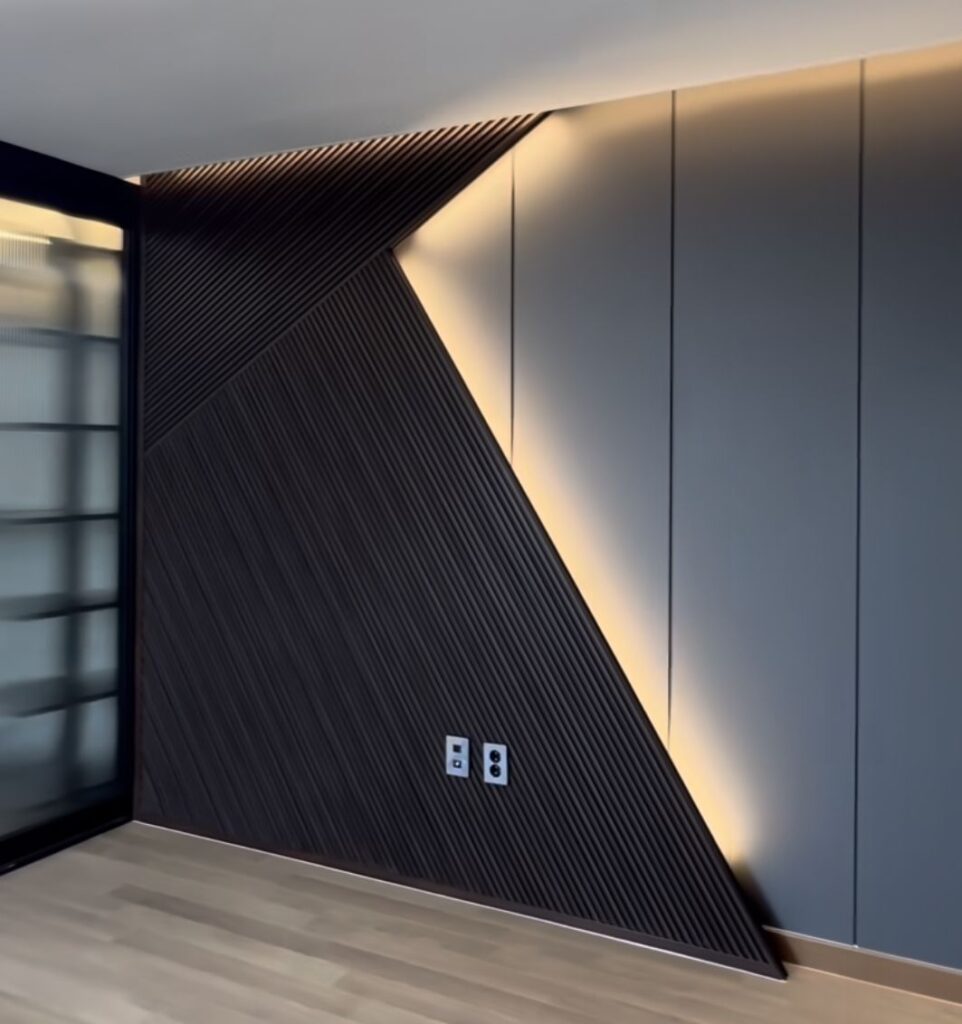
What Are Interior Wall Panels?
Interior wall panels are decorative or functional boards and surface coverings installed over walls to improve their appearance, provide selected forms of protection or introduce additional design features.
They are manufactured from different materials, including wood, engineered timber, plastic composites, gypsum, stone, metal, glass and acoustic fabrics.
Modern wall panels are available in different shapes, thicknesses, colours, patterns and textures. Some have smooth surfaces, while others feature fluted grooves, geometric patterns, raised designs or natural-looking finishes.
Depending on the material and specification, wall panels can be used to:
- Create attractive living-room TV walls.
- Introduce texture and depth into bedrooms.
- Protect selected wall sections in corridors.
- Improve the appearance of office reception areas.
- Create decorative backgrounds for restaurants and hotels.
- Highlight architectural features.
- Support acoustic treatment in selected rooms.
- Conceal minor surface imperfections when the underlying wall is sound.
The best wall panel should complement the room’s purpose, existing finishes and long-term maintenance requirements.
1. MDF Wall Panels
Medium-density fibreboard (MDF) is an engineered wood product manufactured by combining wood fibres with resin under heat and pressure.
It provides a smooth, consistent surface that can accommodate different decorative finishes. This makes MDF a popular material for painted wall mouldings, geometric designs, fluted panels and contemporary feature walls.
Main Characteristics of MDF Panels
- Smooth surfaces suitable for painting.
- Available in different panel thicknesses.
- Can be cut into decorative shapes and patterns.
- Suitable for geometric and symmetrical wall designs.
- Available with different decorative finishes.
- Works well with modern furniture and lighting.
Applications of MDF Wall Panels
Living-room feature walls: MDF can create geometric designs, decorative frames and fluted panels behind television units.
Bedroom headboards: Painted MDF panels can introduce texture and structure behind the bed.
Dining-room walls: Decorative MDF mouldings can create elegant backgrounds that complement dining furniture.
Home offices: Simple MDF wall panels can create a professional backdrop behind desks and shelving.
Corridors: Wainscoting made with suitable MDF products can provide decorative detailing and help protect selected wall sections.
Advantages and Limitations
MDF offers considerable design flexibility and can achieve a refined painted finish. It is also useful for projects that require customised panel shapes.
However, ordinary MDF is sensitive to moisture. It can swell or deteriorate when exposed to persistent dampness. Therefore, use suitable moisture-resistant specifications only where appropriate, and do not treat ordinary MDF as a waterproof material.
2. WPC Wall Panels
Wood-plastic composite (WPC) panels combine wood fibres or wood flour with plastic polymers to create a manufactured decorative material.
WPC panels are popular in contemporary Kenyan interiors because they can reproduce the appearance of timber while offering different maintenance and moisture-performance characteristics from untreated natural wood.
They are available in flat, fluted, slatted and textured profiles, with different wood-inspired colours and finishes.
Main Characteristics of WPC Panels
- Timber-inspired surface textures.
- Different decorative colours and profiles.
- Available in long interlocking sections.
- Suitable for selected interior feature walls.
- Can be installed using appropriate adhesive or mechanical fixing systems.
- Some product specifications offer improved resistance to moisture and insect damage compared with untreated timber.
Applications of WPC Wall Panels
TV feature walls: Fluted WPC panels can create an attractive television backdrop when combined with floating cabinets and concealed lighting.
Bedroom headboards: Wood-effect finishes introduce warmth into contemporary bedrooms.
Office reception areas: WPC panels can create professional backgrounds behind reception counters and branded walls.
Restaurants and hotels: Selected profiles add texture to lounge areas, dining spaces and guest-room interiors.
Corridors: Suitable WPC panels can introduce decorative detailing along selected wall sections.
Advantages and Limitations
WPC panels offer a modern timber-inspired finish, installation flexibility and relatively simple surface maintenance.
However, WPC products vary in composition, thickness, finish and quality. Their moisture resistance, colour stability and durability depend on the specification and installation conditions.
Check product documentation before using WPC in bathrooms, kitchens or areas exposed to direct sunlight. Also consider the manufacturer’s recommendations for cleaning and fixing.
3. PVC Wall Panels
Polyvinyl chloride (PVC) wall panels are lightweight plastic-based decorative panels used for selected interior wall applications.
They come in different colours, patterns and surface finishes, including wood-effect, marble-effect and plain decorative designs.
PVC panels are particularly useful where homeowners want a smooth, easy-to-maintain surface.
Main Characteristics of PVC Panels
- Lightweight construction.
- Available in different colours and patterns.
- Easy-to-clean surfaces, depending on the finish.
- Suitable for selected moisture-prone interior applications.
- Available in different thicknesses and profiles.
- Can be fitted using suitable adhesive or fixing systems.
Applications of PVC Wall Panels
Bathrooms: Suitable products can be used on selected bathroom walls where moisture resistance is required. Installation must still account for waterproofing, joints, edges and the manufacturer’s wet-area recommendations.
Kitchens: PVC can be used for selected decorative wall sections away from unsuitable heat exposure.
Laundry areas: Some PVC panels provide a practical decorative finish in utility spaces.
Rental properties: Their relatively simple cleaning requirements can make suitable products useful for selected rental-property interiors.
Commercial interiors: They can be used in selected reception and decorative wall applications where the product specification matches the operating environment.
Advantages and Limitations
PVC panels are lightweight and available in many decorative finishes. Some products offer good moisture resistance and require relatively simple cleaning.
However, PVC panels are not all manufactured to the same specification. Heat exposure, fire performance, impact resistance and surface durability vary by product.
Always confirm the manufacturer’s suitability recommendations, particularly near cooking appliances and electrical equipment.
4. Natural Timber Wall Panels
Natural timber panels bring warmth, texture and an authentic wood appearance into an interior.
They can be manufactured from different timber species and finished using stains, sealants, oils or protective coatings.
Depending on the timber and design, they can create rustic, contemporary, Scandinavian or luxury interior styles.
Popular Timber Panel Designs
- Vertical timber slats.
- Horizontal wooden panels.
- Fluted timber panels.
- Natural wood-grain boards.
- Decorative timber grids.
- Timber veneer feature sections.
Applications of Natural Timber Panels
Living rooms: Timber can create warm TV walls, entertainment backdrops and feature sections behind sofas.
Bedrooms: Wooden panels work well behind beds and can complement matching bedside furniture.
Home libraries: Timber adds warmth to shelving and selected reading spaces.
Dining rooms: Natural wood finishes create a welcoming backdrop for dining furniture.
Premium office interiors: Selected timber panels can introduce a warm, professional appearance into executive offices and boardrooms.
Advantages and Limitations
Natural timber offers unique grain patterns and a distinctive appearance. It can also be refinished in some applications.
However, timber requires appropriate treatment, sealing and maintenance. Moisture, changing environmental conditions and insect exposure can affect its performance.
Select the timber species and protective finish according to the intended environment. Where termite protection is important, ensure suitable timber treatment and building maintenance measures are in place.
5. Wood Veneer Wall Panels
Wood veneer panels use a thin layer of natural timber applied to an engineered substrate, such as MDF or plywood.
They provide the appearance of natural wood while allowing more consistent panel dimensions and efficient use of timber.
Veneers are available in different grain patterns, colours and finishes.
Applications of Wood Veneer Panels
- Luxury living-room feature walls.
- Bedroom headboard backdrops.
- Executive office interiors.
- Boardroom wall finishes.
- Hotel reception areas.
- Dining-room feature sections.
- Custom cabinetry and decorative joinery.
Wood veneer works particularly well where a coordinated timber finish is required across wall panels, cabinets and furniture.
Its main consideration is the substrate and edge detailing. Poor sealing or unsuitable exposure to moisture can damage the panel. Choose a suitable finish and follow the manufacturer’s maintenance instructions.
6. Plywood Wall Panels
Plywood is an engineered wood panel manufactured by bonding thin layers of wood veneer together.
Its layered construction provides useful strength and stability when properly specified and installed.
Plywood can be used as a decorative surface, a substrate for other finishes or a visible architectural feature.
Applications of Plywood Wall Panels
- Modern home offices.
- Media-room walls.
- Shelving and storage features.
- Decorative timber-inspired interiors.
- Children’s study spaces.
- Selected commercial interiors.
- Custom joinery and built-in furniture.
Plywood can retain its natural wood appearance with a suitable clear finish, or it can receive paint, laminate or veneer.
However, different plywood grades have different surface qualities and moisture suitability. Select a grade that matches the intended application and ensure exposed edges receive appropriate finishing.
7. Laminate Wall Panels
Laminate panels use decorative surface layers bonded to a supporting board or substrate.
They can reproduce wood grain, stone patterns, solid colours and other decorative finishes. High-pressure laminate (HPL) products are also used where a more durable and easy-to-clean decorative surface is required.
Applications of Laminate Panels
Kitchens: Suitable laminate wall panels can provide decorative finishes around selected cabinetry and wall sections.
Offices: They can create neat reception backdrops and meeting-room feature walls.
Living rooms: Wood-effect and textured laminate panels can complement entertainment units and shelving.
Retail spaces: Decorative laminate surfaces can create coordinated backgrounds for product displays.
Commercial interiors: Selected laminates are useful where appearance and cleaning requirements must be balanced.
Advantages and Limitations
Laminate panels offer many decorative choices and can be easier to maintain than some natural materials.
However, performance depends on the laminate type and supporting board. Moisture can damage exposed or poorly sealed edges, particularly when the substrate is not suitable for the environment.
Check whether the product is HPL, a lower-pressure decorative laminate or another type before comparing specifications.
8. Gypsum and 3D Wall Panels
Gypsum-based decorative panels are manufactured from gypsum plaster and formed into raised or sculptural patterns.
They are available in geometric, wave, linear and other decorative designs. Some can be painted to match the surrounding interior.
Unlike flat wall coverings, 3D panels create physical depth and shadows that change with the direction of light.
Popular Gypsum and 3D Wall Panel Designs
- Geometric raised patterns.
- Wave-effect panels.
- Decorative square patterns.
- Floral and abstract designs.
- Linear textured panels.
- Custom sculptural wall features.
Applications of 3D Wall Panels
Living rooms: Create a focal wall behind the television or sofa.
Reception areas: Introduce texture behind reception counters and branded signage.
Bedrooms: Create selected decorative sections behind the headboard.
Restaurants: Add visual interest to dining and lounge areas.
Hotels: Create distinctive feature walls in lobbies and selected guest spaces.
Offices: Use simple 3D panels in meeting rooms and selected reception areas.
Advantages and Limitations
Gypsum panels offer decorative flexibility and can be painted in different colours. Their raised surfaces create depth without using thick natural stone.
However, they can be brittle and may require careful handling and installation. Deep patterns can also collect dust.
The panel specification should suit the location. Ordinary gypsum decorative panels are generally better suited to dry interior spaces rather than areas exposed to persistent moisture.
For additional ideas, explore our modern 3D wall panels and decorative wall finishes.
9. Stone and Marble-Look Wall Panels
Stone wall panels introduce a natural, textured and often premium appearance.
Natural stone options include marble, granite, slate and other decorative stones. Alternatively, manufactured marble-look boards and porcelain surfaces can reproduce similar patterns without using full natural stone slabs.
These materials should not be treated as identical because their weight, composition, installation requirements and maintenance needs differ.
Applications of Stone Wall Panels
- Living-room feature walls.
- Fireplace surrounds, where the material is suitable for the heat exposure.
- Entrance and foyer walls.
- Hotel lobbies.
- Reception areas.
- Restaurant interiors.
- Selected bathroom features.
- Premium dining-room backdrops.
Advantages and Limitations
Natural stone provides authentic texture and distinctive patterns. Some manufactured alternatives offer a lighter installation option and more uniform designs.
However, natural stone can be heavy and may require specialised mechanical fixing or suitable structural support. Some stones also need sealing and specific cleaning products.
Marble-look panels may offer a similar visual effect at a different price point, but their actual performance depends on the product substrate and surface specification.
Before installation, confirm the wall’s load capacity, fixing system and the manufacturer’s requirements.
10. Metal Wall Panels
Metal wall panels introduce a contemporary or industrial appearance into selected residential and commercial interiors.
Common options include aluminium, stainless steel and decorative metal panels with different surface finishes.
They may feature brushed, polished, perforated, textured or coloured surfaces.
Applications of Metal Wall Panels
- Modern commercial reception areas.
- Restaurants and cafés.
- Industrial-style living rooms.
- Selected kitchen feature walls.
- Retail interiors.
- Decorative columns and architectural details.
- Offices and boardrooms.
Metal panels can create a distinctive visual effect and are available in different durable surface finishes.
However, they may show fingerprints, scratches or dents depending on the finish. Their reflective properties can also create glare.
Consider combining metal with wood, stone or neutral painted surfaces to prevent the interior from looking too industrial.
11. Glass and Acrylic Wall Panels
Glass and acrylic panels create smooth, contemporary surfaces. They can also introduce reflective qualities and visual openness.
Glass options include clear, frosted, tinted, back-painted and textured varieties. Acrylic alternatives can provide a lighter decorative option, although their scratch resistance and heat suitability vary.
Applications of Glass and Acrylic Panels
Kitchens: Suitable back-painted glass panels can create decorative wall sections and selected splashbacks.
Bathrooms: Appropriate glass installations can complement modern bathroom designs.
Offices: Frosted or decorative glass can create visual separation while allowing light to pass through.
Living rooms: Back-painted glass can introduce a contemporary feature.
Retail interiors: Decorative panels can complement display areas and reception spaces.
Advantages and Limitations
Glass is easy to clean and can create a smooth, modern finish. Frosted and coloured options also provide different privacy and decorative effects.
However, glass requires professional measurement, suitable safety specifications and correct installation. Acrylic can scratch more easily than some glass alternatives and may be unsuitable near heat sources unless specifically rated.
Always select the material according to the intended application.
12. Fabric and Acoustic Wall Panels
Fabric and acoustic wall panels combine decorative finishes with sound-absorption properties.
They typically use fabric, felt or another suitable surface material over an acoustic core or backing.
Unlike decorative panels that primarily change appearance, acoustic panels are selected to help control reflections and echoes within a room.
Applications of Acoustic Wall Panels
- Home theatres.
- Music rooms.
- Home offices.
- Study rooms.
- Conference rooms.
- Meeting rooms.
- Hotels and hospitality interiors.
- Selected bedroom and lounge spaces.
Fabric panels can also create upholstered wall sections behind beds or in lounge areas.
Advantages and Limitations
Acoustic panels can improve sound comfort when correctly selected and positioned. They are particularly useful in rooms where reflected sound affects conversations, entertainment or recording activities.
However, sound absorption is not the same as soundproofing. A decorative fabric panel will not automatically prevent sound from passing through a wall.
Fabric panels may also collect dust and require more careful maintenance than smooth surfaces. Check the cleaning instructions and fire-performance documentation before selecting them for residential or commercial projects.
13. Popular Modern Wall Panel Styles and Patterns
The material is only one part of wall panel design. The panel profile, arrangement and detailing also determine the final appearance.
Here are popular styles used in contemporary homes and commercial interiors.
Fluted Wall Panels
Fluted panels feature repeated vertical or horizontal grooves that create depth and shadows.
They are widely used behind television units, bedroom headboards, reception counters and dining areas.
Vertical profiles can visually emphasise wall height, while horizontal arrangements can create a wider visual effect.
Wooden Slat Panels
Slatted panels use narrow strips arranged with consistent spacing.
They create a linear architectural finish that works well in minimalist, Scandinavian and contemporary interiors.
They are commonly used on feature walls, entrance areas, home offices and entertainment spaces.
Wainscoting
Wainscoting covers the lower or selected sections of a wall using decorative panels or mouldings.
It can introduce a traditional, classic or contemporary appearance depending on the pattern and finish.
Wainscoting also works as selected wall protection in corridors, staircases and other busy areas.
Geometric Wall Panels
Geometric designs use repeated squares, rectangles, diamonds or other structured shapes.
Painted MDF, timber and suitable decorative boards can create these patterns.
They work particularly well in living rooms, dining areas and home offices.
Three-Dimensional Sculptural Panels
These panels have raised or recessed designs that create shadows and visual movement.
They are useful in large feature walls, reception spaces and selected hospitality interiors.
Choose the pattern carefully because deep textures can require additional cleaning.
Stone-Effect and Marble-Look Panels
These panels reproduce the appearance of natural materials using manufactured surfaces or decorative finishes.
They can create striking living-room, dining-room and reception features without necessarily using full natural stone slabs.
Modern Interior Wall Panel Materials and Their Applications: Comparison Table
The following table summarises the main materials and their most suitable uses.
| Material | Main advantage | Suitable applications | Key consideration |
|---|---|---|---|
| MDF | Smooth, customisable surface | Living rooms, bedrooms, offices | Protect from moisture |
| WPC | Timber-inspired finishes and selected moisture resistance | TV walls, bedrooms, receptions | Check product specification |
| PVC | Lightweight and easy to clean | Selected bathrooms and utility areas | Check heat and fire suitability |
| Natural timber | Authentic grain and warmth | Premium living rooms and bedrooms | Maintenance and timber treatment |
| Wood veneer | Natural timber appearance on engineered board | Bedrooms, offices and lobbies | Protect substrate and edges |
| Plywood | Versatile engineered wood construction | Study rooms, storage and decorative features | Select suitable grade and finish |
| Laminate/HPL | Wide range of decorative surfaces | Kitchens, offices and retail spaces | Seal vulnerable edges |
| Gypsum/3D | Raised decorative patterns | Living rooms, receptions and hotels | Protect from moisture and impact |
| Natural stone | Distinctive natural texture | Entrances, fireplaces and feature walls | Weight and installation support |
| Metal | Contemporary industrial appearance | Offices, restaurants and selected kitchens | Scratches, reflections and cost |
| Glass/acrylic | Smooth reflective finish | Kitchens, offices and decorative features | Safety, heat and scratch specifications |
| Fabric/felt | Acoustic sound absorption | Home theatres, offices and bedrooms | Dust, cleaning and fire performance |
Best Wall Panel Materials for Different Rooms
Choosing panels by room helps avoid selecting an attractive material that does not suit the environment.
Living Room Wall Panels
The living room provides one of the best opportunities to create a statement wall.
Popular choices include WPC fluted panels, MDF geometric panels, timber veneer, 3D gypsum and stone-effect finishes.
A TV wall can combine decorative panels with a floating media cabinet, shelves and concealed LED lighting.
For a balanced result, use the decorative material on one main wall and keep the surrounding walls relatively simple.
Bedroom Wall Panels
Bedrooms benefit from materials that introduce warmth and texture without making the room feel busy.
Consider wooden slats, WPC panels, upholstered panels, MDF mouldings and selected veneer finishes behind the bed.
A headboard wall can combine panel detailing with bedside lighting and coordinated bedroom furniture.
Dining Room Wall Panels
Dining areas can use wainscoting, geometric MDF panels, timber-look finishes or decorative 3D panels.
A textured wall behind the dining table can create a focal point that complements the table, chairs and lighting.
Kitchen Wall Panels
Kitchen panels should be selected according to their exposure to heat, moisture, grease and regular cleaning.
Suitable laminate surfaces, properly specified glass and selected moisture-resistant products can work in appropriate locations.
Do not install ordinary timber, MDF or decorative PVC close to heat sources unless the product is specifically suitable for that application.
Bathroom Wall Panels
Bathrooms need materials designed for the moisture conditions in the installation area.
Appropriate PVC, glass or other manufacturer-approved wet-area systems may be considered, but the wall still requires correct waterproofing and detailing.
Avoid using ordinary MDF, untreated timber or decorative fabric panels in areas exposed to regular water.
Hallway and Staircase Wall Panels
Corridors and staircases experience frequent contact from people, bags and household movement.
Wainscoting and appropriately durable panels can help protect selected wall sections while improving their appearance.
Choose finishes that are easy to clean and resistant to everyday contact.
Home Office and Home Theatre Panels
For home offices, consider timber veneer, simple MDF patterns and selected acoustic panels.
Home theatres benefit from properly specified acoustic treatment that helps manage sound reflections. Plan the acoustic requirements before selecting decorative fabrics or foam panels.
How to Choose the Right Interior Wall Panel Material
Before purchasing wall panels, assess the room, the wall condition and the performance requirements.
1. Identify the Purpose of the Wall
Decide whether you need a decorative feature, impact protection, acoustic improvement or a combination of these functions.
A TV backdrop may require a different material from a hallway wall that receives regular contact.
2. Consider Moisture Exposure
Check whether the room experiences high humidity, splashing or regular cleaning.
Choose products that the manufacturer approves for the intended environment.
3. Review Durability
Consider how frequently the wall will be used or touched. Busy corridors, commercial receptions and family areas may require stronger or easier-to-maintain finishes.
4. Match the Material to Your Interior Style
Select colours and textures that complement the flooring, ceilings, curtains, furniture and lighting.
5. Check Maintenance Requirements
Some panels require only basic surface cleaning, while timber and fabric may need more specialised care.
6. Consider the Installation Method
Some products use adhesive, while others require battens, clips or mechanical fixings.
The wall condition and product weight should determine the appropriate installation method.
7. Check Product Quality and Documentation
Review the panel thickness, finish, fixing instructions, moisture rating, cleaning guidance and fire-performance documentation where relevant.
This is particularly important for commercial projects and areas where fire-safety requirements apply.
How Much Do Interior Wall Panels Cost in Kenya?
Interior wall panel costs in Kenya depend on the material, design, thickness, surface finish, wall dimensions and installation method.
The following are indicative Nairobi planning ranges published in related Kenyan wall-panel installation guidance. They are not fixed nationwide supplier prices.
| Wall panel type | Indicative price per m² |
|---|---|
| Standard PVC wall panels | KES 2,500–4,500 |
| Fluted decorative panels | KES 3,500–6,500 |
| Premium marble-look panels | KES 4,500–8,500 |
| Custom 3D feature panels | Quotation based on design and specification |
WPC, premium timber veneer, natural stone, specialised acoustic systems and customised architectural panels can require different budgets.
Factors That Determine Wall Panel Installation Costs
Material quality: Different products have different thicknesses, finishes, construction and durability.
Wall dimensions: The total area determines the quantity of panels required. Doors, windows and other openings affect the final material calculation.
Design complexity: Fluted profiles, geometric patterns, curves, custom layouts and integrated lighting may require more detailed installation.
Wall preparation: Dampness, cracks, uneven plaster and loose paint may require repairs before panels can be fitted.
Installation method: Adhesives, battens, mechanical fixings, trims and corner profiles affect the project cost.
Lighting integration: LED strips, aluminium profiles, drivers and electrical modifications can increase the overall budget.
Location and transport: Delivery and installation logistics may influence quotations for projects outside Nairobi.
Before accepting a quotation, check whether it includes materials, preparation, installation, trims, adhesives, finishing and transport.
For more details, read our guide on wall cladding costs in Kenya.
Wall Panel Installation Process
Correct installation is essential for achieving an attractive and durable finish.
Step 1: Inspect the Existing Wall
Check the surface for moisture, cracks, uneven plaster and loose paint. Address underlying problems before covering the wall.
Step 2: Measure the Installation Area
Measure the wall width and height and account for windows, doors, sockets, switches and other openings.
Step 3: Select the Panel Material
Choose a suitable material based on the room, preferred design, maintenance requirements and available budget.
Step 4: Prepare the Design Layout
Plan the panel arrangement, joint positions, corners, trims and alignment before cutting the materials.
Step 5: Prepare the Wall
Clean and prepare the surface according to the selected installation system. Depending on the product, this may involve levelling, priming or installing battens.
Step 6: Install the Panels
Use the manufacturer’s recommended adhesive, clips, screws or mechanical fixing system.
Step 7: Complete the Edges and Joints
Install the appropriate trims, corner profiles and finishing details to create neat edges and consistent panel alignment.
Step 8: Coordinate Lighting and Other Finishes
Complete the required LED lighting, electrical adjustments, painting and related joinery works.
Step 9: Inspect and Clean
Check the panel alignment, fixing, joints and finished appearance before handing over the installation.
Common Wall Panel Installation Mistakes to Avoid
Even high-quality wall panels can produce disappointing results when the design and installation are poorly planned.
Avoid these common mistakes:
1. Installing panels over damp walls: Wall panels should not be used to conceal unresolved water leaks or persistent dampness.
2. Choosing materials based only on appearance: Check moisture resistance, maintenance requirements and product suitability.
3. Covering every wall with decorative panels: Too many textures can make an interior look crowded. Use selected feature walls strategically.
4. Poor panel alignment: Uneven spacing and badly finished joints reduce the quality of the final appearance.
5. Ignoring electrical points: Plan sockets, switches, television connections and lighting before installing the panels.
6. Using unsuitable adhesive or fixings: Follow the product manufacturer’s recommended installation method.
7. Ignoring panel weight: Heavy stone or other substantial materials may require mechanical fixing and suitable wall support.
8. Choosing deep profiles in dusty areas: Deep grooves can collect dust and require more frequent cleaning.
9. Poor edge finishing: Exposed board edges, untidy corners and inconsistent trims can make a wall look unfinished.
10. Installing the wrong panel in wet areas: Check whether the specific product is approved for the intended moisture exposure.
Why Choose InteriorDesigners.co.ke for Wall Panel Design and Installation?
Modern wall panels can transform ordinary walls into attractive architectural features. However, the final result depends on the choice of material, accurate measurements, coordinated design and professional installation.
InteriorDesigners.co.ke provides decorative wall panel and wall finishing solutions for residential and commercial properties across Kenya.
Our services can include:
- WPC wall panel installation.
- MDF and fluted wall panels.
- PVC marble sheet installation.
- Decorative 3D wall panels.
- Wainscoting installation.
- Custom TV wall design.
- Wall cladding and feature walls.
- Reception and office wall finishes.
- Integrated LED feature wall detailing.
- Painting and finishing works.
- 3D interior design visualisations.
- Complete interior fit-out solutions.
With over 18 years of experience and more than 3,000 completed projects, our team provides interior design and fit-out solutions across Kenya.
Whether you are upgrading a living-room TV wall, designing a bedroom headboard or creating a commercial reception feature, we can help you choose a suitable panel material and coordinate it with the rest of your interior.
Contact InteriorDesigners.co.ke for Wall Panel Installation in Kenya
Planning to upgrade your home or commercial space with modern wall panels?
Contact InteriorDesigners.co.ke to discuss your preferred material, wall dimensions, design style and installation requirements.
Our team can assist with material selection, design planning, measurements, supply and installation, depending on your project scope.
Contact Details
Contact page: Request a Wall Panel Installation Consultation
Location: Nairobi CBD
Phone: 0717 044 443 / 0739 255 050 / 0725 021 709
Email: info@interiordesigners.co.ke
Website: InteriorDesigners.co.ke
Contact our team to discuss your wall panel project and request a quotation based on the material, design and wall measurements.
Related Interior Design Services We Offer
Explore more wall finishing and interior design services:
- Wall Panels Installation in Nairobi
- Wall Cladding and Wainscoting Installation
- Fluted Panels with Lighting: Modern Wall Features
- 3D Designs and Layout Planning
- Gypsum Ceiling Installation Services
- Floor Installation Services
- Home Renovation and Remodelling
For additional inspiration, explore our related wall finishing guides:
- Interior Wall Finishes in Kenya
- Wall Cladding in Kenya: Which Material Works Where
- Wall Cladding Cost in Kenya
You can also explore our related websites:
Areas We Serve Across Kenya
InteriorDesigners.co.ke provides wall panel installation and interior design solutions across all 47 counties in Kenya, including Nairobi, Mombasa, Kwale, Kilifi, Tana River, Lamu, Taita-Taveta, Garissa, Wajir, Mandera, Marsabit, Isiolo, Meru, Tharaka-Nithi, Embu, Kitui, Machakos, Makueni, Nyandarua, Nyeri, Kirinyaga, Murang’a, Kiambu, Turkana, West Pokot, Samburu, Trans Nzoia, Uasin Gishu, Elgeyo-Marakwet, Nandi, Baringo, Laikipia, Nakuru, Narok, Kajiado, Kericho, Bomet, Kakamega, Vihiga, Bungoma, Busia, Siaya, Kisumu, Homa Bay, Migori, Kisii and Nyamira.
In Nairobi, we serve areas including Nairobi CBD, Westlands, Parklands, Kilimani, Kileleshwa, Lavington, Karen, Runda, Muthaiga, Gigiri, Riverside, Upper Hill, Hurlingham, South C, South B, Langata, Embakasi, Donholm, Eastleigh, Kasarani, Roysambu, Ruaraka, Umoja, Buruburu, Komarock, Kayole, Ruai, Ngara and Pangani.
In Mombasa, our service areas include Mombasa CBD, Nyali, Bamburi, Shanzu, Kisauni, Kizingo, Tudor, Tononoka, Mvita, Changamwe, Jomvu, Likoni, Mikindani, Port Reitz, Bombolulu, Kongowea and Mkomani.
Frequently Asked Questions About Modern Interior Wall Panels
1. What are the best materials for modern interior wall panels?
Popular choices include MDF, WPC, PVC, natural timber, wood veneer, laminate, gypsum, stone, metal and acoustic fabric. The best material depends on the room, moisture exposure, maintenance requirements and preferred design.
2. What is the difference between WPC and MDF wall panels?
WPC combines wood fibres with plastic polymers, while MDF is manufactured from wood fibres bonded with resin. WPC products can offer better moisture tolerance than ordinary MDF, although the actual performance depends on the product specification.
3. Are WPC wall panels suitable for Kenyan homes?
Yes. Suitable WPC products can be used in living rooms, bedrooms, offices, reception areas and selected hospitality interiors. Check the manufacturer’s specifications for moisture exposure, heat, fire performance and installation requirements.
4. Are MDF wall panels waterproof?
No. Ordinary MDF is not waterproof and can swell or deteriorate when exposed to persistent moisture. Select an appropriate moisture-resistant product where necessary, and protect exposed edges.
5. Which wall panels are best for bathrooms?
Suitable PVC, glass and other approved wet-area panel systems may be considered. The installation must also account for waterproofing, joints, edges and the manufacturer’s recommendations.
6. Which wall panel material is best for a living-room TV wall?
WPC fluted panels, MDF geometric panels, timber veneer, 3D gypsum and stone-effect panels are popular choices. The right material depends on the desired appearance, television arrangement, lighting and budget.
7. Do wall panels make a room look smaller?
They can, depending on their colour, pattern and coverage. Dark or heavily textured panels across several walls may make a compact room feel visually busy. Using a lighter material on one feature wall can create a more balanced appearance.
8. Are wall panels better than paint?
They serve different purposes. Paint is flexible and generally more economical for covering large wall areas. Wall panels introduce physical texture, decorative patterns and selected protective properties. Many interiors combine painted walls with one or two feature-panel sections.
9. How long do interior wall panels last?
Their lifespan depends on the material, product quality, installation, moisture exposure and maintenance. Follow manufacturer guidance and address wall leaks or dampness before installation to protect the finished surface.
10. Do wall panels require special maintenance?
Maintenance varies by material. Smooth PVC and suitable WPC panels can often be cleaned with a soft cloth, while natural timber may need periodic protective treatment. Fabric panels and deeply textured surfaces may require more careful cleaning.
11. How much do wall panels cost in Kenya?
Indicative Nairobi ranges include KES 2,500–4,500 per m² for standard PVC panels, KES 3,500–6,500 for fluted decorative panels and KES 4,500–8,500 for premium marble-look panels. Custom designs and other materials require separate quotations.
12. Can wall panels be installed over existing painted walls?
Sometimes. The existing wall must be sound, dry and suitable for the selected fixing system. Loose paint, dampness, cracks and uneven surfaces should be addressed before installation.
13. Can wall panels be combined with LED lighting?
Yes. LED strips can be integrated into selected fluted panels, TV walls, shelving and decorative wall features. Plan the electrical connections, profiles and access for maintenance before installation.
14. Are wall panels suitable for offices and commercial spaces?
Yes. Suitable MDF, WPC, laminate, acoustic and other commercial-grade panels can be used in reception areas, boardrooms, hotels, restaurants and selected corridors. Check durability, cleaning and fire-performance documentation for the intended application.
